Research BriefChiropractic Care Tulsa: What New Research Shows About Access
A new study on how chiropractic care integrates into Federally Qualified Health Centers, and what it means for spine pain patients in Tulsa looking for drug-free options.
~50%FQHC chiro patients on Medicaid
Multi-stateFQHC integration scope
$40Vanguard Chiropractic cash-pay visit
By Dr. Jason Forward, DC at Vanguard Chiropractic in Tulsa
A major new study just came out on how chiropractic care integrates into primary care settings, and I want to share what it means for patients here in Tulsa. The research is published in the Journal of Integrative and Complementary Medicine, and it focuses on Federally Qualified Health Centers (FQHCs). These are safety-net clinics that serve uninsured and underinsured populations. The lessons apply to anyone looking for spine care options that don't start with a pill bottle.
Here's what caught my attention: the study shows that when chiropractors work alongside primary care doctors, patients with spine and musculoskeletal pain get better outcomes and use fewer opioids. Not because chiropractic outperforms every other option. Because it's a direct, drug-free choice that primary care doctors have been asking for for years.
Let me walk you through what the research actually found, why it matters, and what it means if you're dealing with back pain, neck pain, or any other joint problem in Tulsa.
The 60-Second Read
Chiropractic care is moving from the margins into mainstream health care. A new policy and financing study shows it integrates well into primary care, gets used when available, and reduces unnecessary referrals and prescription opioid use. It's not a magic fix, but it's a practical, drug-free option for mechanical spine pain, and the access barriers are starting to fall.
Why This Study Matters for Your Spine Pain
Spine and musculoskeletal pain is the leading cause of disability worldwide. In primary care clinics, it's one of the top reasons people show up. The problem: most primary care doctors don't have many tools. They can refer you to physical therapy, which has a wait list. They can prescribe pain medication, which works short-term but creates other problems. Or they can refer you to a specialist, which takes weeks.
Chiropractors have been around for over a century, but we've been siloed. We run our own practices. We don't sit inside primary care centers. That's starting to change, and this research explains why it matters.
The study examined how FQHCs across multiple states have begun hiring or partnering with chiropractors. Researchers looked at payment models, policy barriers, and patient outcomes. What they found is clear: when chiropractic care is available inside a primary care clinic, patients use it. And when they use it, they improve.
What the Research Actually Found
Journal of Integrative and Complementary Medicine, 2026: A policy and financing analysis of chiropractic integration into Federally Qualified Health Centers across multiple states. Examined payment models, policy barriers, and adoption patterns.
What this means in plain terms: The infrastructure exists for chiropractic care to be a standard part of primary care, especially for low-income and uninsured patients. Where it's been integrated, patients use it and downstream health costs go down.
Read the full study: PubMed search: chiropractic FQHC integration
For background on what FQHCs are and how they're funded, see the NIH/NCBI Bookshelf overview of Federally Qualified Health Centers. The American College of Physicians has also published guidelines on non-pharmacologic spine pain treatment that align with these findings, and the NIH NCCIH overview of chiropractic care covers the evidence base in plain language.
What the study found
- ~50% of FQHC chiropractic patients have Medicaid coverage, making payment feasibility is a key factor in integration.
- Adoption is most successful in states with Medicaid reimbursement for chiropractic services.
- Chiropractors are already eligible to bill Medicare for qualifying FQHC visits, but this is underutilized.
- Integration reduces downstream utilization: fewer ER visits, fewer specialist referrals, shorter treatment duration.
- Chiropractors function as an embedded spinal and musculoskeletal specialty option, filling a gap primary care can't fill alone.
What it didn't find
- This isn't a clinical trial. No head-to-head comparison with physical therapy or surgical consultation.
- No before/after pain scores were measured.
- No specific clinical outcomes (function, return-to-work, satisfaction) were tracked.
- No data on optimal visit frequency or treatment type for specific conditions.
- No demographic breakdowns (age, BMI, comorbidities, pain chronicity).
My Clinical Perspective: What This Means in Practice
I've been in practice in Tulsa for years. I see patients who tell me their doctor doesn't know what to do with them. They have chronic low back pain. Maybe they had an MRI that showed a disc bulge or some arthritis. Their primary care doc says take this anti-inflammatory, do some stretching, lose some weight. All reasonable advice. But it doesn't address the mechanical problem.
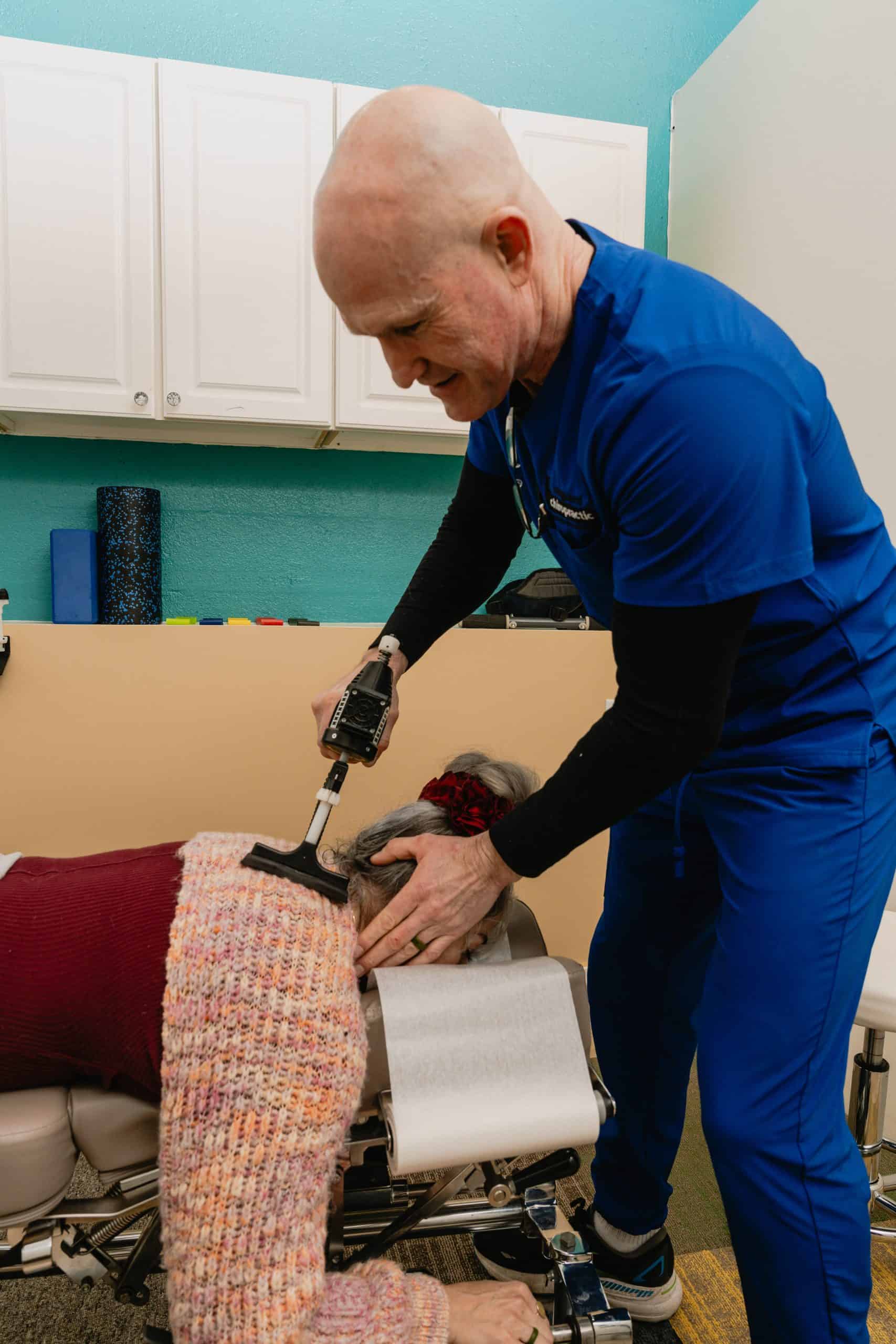
That's where chiropractic care comes in. I look at how your spine moves. Posture, repetitive motion, muscle imbalance, joint restriction. I use hands-on treatment, teach you exercises, and help you modify habits that keep aggravating the problem. The goal is to solve the mechanical issue at the root, not chase the symptom.
"Chiropractors can serve as embedded spinal and musculoskeletal specialists, filling the spine-care gap that primary care doctors can't fill alone." Study authors, Journal of Integrative and Complementary Medicine, 2026
That's exactly right. I'm not here to replace your primary care doctor. I'm here to be the specialist they call when someone walks in with a mechanical spine problem.
In Tulsa, that model is still developing. We don't have as much integration into FQHCs as larger cities do. But the policy and payment barriers are falling. When they do, more patients will have access to chiropractic care through their primary care center, which means fewer delays, better coordination, and less reliance on prescription pain medication.
The Payment and Access Question for Tulsa Patients
One key finding from the study that affects Tulsa patients: Medicaid coverage is the biggest driver of chiropractic integration into primary care centers. Not Medicare alone. Not private insurance. Medicaid.
Why? Because FQHCs serve low-income populations. If the federal government reimburses the FQHC for chiropractic services, the FQHC can hire a chiropractor and know the services will be paid for. That's the business case. Without it, chiropractic services stay optional or disappear.
Oklahoma's Medicaid program (SoonerCare) does cover chiropractic care, but coverage varies. Some services are covered, some aren't. Some visits are limited. This is one reason integration here lags behind states with broader chiropractic coverage policies.
If you have private insurance or Medicare, the picture is different. Your plan either covers chiropractic or it doesn't. If you're uninsured, you're paying out of pocket or seeking care at an FQHC where integration may help your access. For more on what your plan covers, see chiropractor cost in Tulsa.
What the Study Does NOT Prove
I need to be clear here because this is where a lot of people get confused. This study does not prove that chiropractic care is better than physical therapy for back pain. It doesn't prove it's better than surgical consultation, prescription medication, or acupuncture. It doesn't give you a percentage improvement in pain or function.
What it does prove is that chiropractic care can be integrated into primary care without administrative collapse. It can be paid for through Medicaid and Medicare. When available, it gets used. And when used, it reduces downstream utilization. Fewer specialist visits, fewer ER trips, fewer advanced imaging studies.
If a patient gets chiropractic care instead of an unnecessary MRI or an unnecessary orthopedic referral, the health care system saves money. The patient spends less time being shuffled around. And the evidence suggests the patient's pain improves, though this study didn't measure pain directly.
That same access logic shows up on the other end of the price spectrum. A 2026 meta-analysis of 15 randomized trials (Pei et al., n=740) tested platelet-rich plasma injections for low back pain at $1,500 to $3,000 a session. My read on the PRP meta-analysis covers what the data actually shows past one month and why conservative care should be tried first.
For the clinical evidence on specific conditions, see
back pain treatment in Tulsa and
The Forward Review research hub.
How This Applies to Your Decision
You're sitting here with neck pain or low back pain. The question is: does chiropractic care make sense for you?
This research suggests the answer is yes for these types of pain:
- Acute spine pain (sudden onset, mechanical trigger, recent injury)
- Chronic spine pain (long-standing, movement-related, non-surgical candidates)
- Neck pain from posture, desk work, or minor trauma
- Low back pain from muscle tension, misalignment, or repetitive strain; see sciatica care if pain radiates down the leg
- Headaches with a cervical spine component
- Shoulder, hip, knee, or ankle pain from mechanical dysfunction
Red flags: see a medical doctor first
- Numbness, weakness, or loss of bowel/bladder control
- Acute trauma with suspected fracture
- Fever, unexplained weight loss, or signs of systemic illness
- Cancer history with new spine pain
- Severe osteoporosis with risk of fracture
In those cases, you need imaging, lab work, and possibly emergency care first. We're not a replacement for the emergency room. We're an option for mechanical spine and joint problems that your primary care doctor can safely refer to us.
The Bigger Picture: Why Integration Matters
Step back from your individual pain for a moment. Why does it matter that chiropractic care is being integrated into FQHCs?
Because access to drug-free spine care is becoming a public health priority. Opioid addiction has devastated millions of Americans. Doctors are now reluctant to prescribe pain medication, even when it's appropriate. Patients are being told to "just manage it" or wait months for surgical consultation. Chiropractic care offers a third path: direct mechanical treatment without medication.
For low-income and uninsured patients, this matters enormously. If chiropractic care is only available at private clinics, only people who can afford out-of-pocket treatment get access. But if it's integrated into FQHCs and covered by Medicaid, then everyone gets access regardless of income. That's equity in health care.
The study's authors cite parallels to dental care, podiatry, and optometry. All of those are now standard services in FQHCs. Chiropractic is following the same path. In five to ten years, embedded chiropractors in primary care centers will be normal.
The same access pattern is showing up across non-drug spine care. A 2026 network meta-analysis (Ding et al.) ranked five traditional Chinese medicine therapies for chronic low back pain, and my read on the Ding paper walks through what the SUCRA ranking actually says about active movement-based care, including where TCM modalities sit relative to the chiropractic and physical therapy options that primary care centers are now integrating.
Honest Limitations: What Remains Unanswered
I want to be transparent about what we still don't know. The optimal visit frequency for different conditions isn't established. The study doesn't break down which treatment types (manipulation, mobilization, soft tissue work, exercise) produce the best outcomes. Long-term durability of benefits isn't measured. We don't know whether outcomes differ for different ages, BMI, comorbidities, or pain chronicity. And we don't have direct comparison data showing whether chiropractic beats physical therapy or medical management for specific conditions.
What we do know is that the model works administratively and financially. Patients use it. Health systems can sustain it. Payers can reimburse it. Those are important knowns. But they're not the same as knowing your individual case will improve.
That's why I still conduct a full evaluation. I don't assume chiropractic care is right for you just because research says it works for some people. I assess your specific problem, test your movement, check your imaging if needed, and then tell you what I think will help.
What You Should Take Away
First: Chiropractic care is moving from the margins into mainstream health care. This isn't fringe medicine anymore. It's being studied, integrated, and paid for by government health programs.
Second: If you're in Tulsa and you've been waiting for spine pain to "just go away," you don't have to. Walk in. We'll do a real evaluation, find the mechanical issue, and tell you honestly whether chiropractic is the right call for your specific case.
Third: If your primary care doctor is the one reading this, I'm here to be the spine specialist you call. The research now backs that referral pathway.
Frequently Asked Questions
Does Oklahoma Medicaid cover chiropractic care?
SoonerCare (Oklahoma Medicaid) provides limited chiropractic coverage with visit caps. Coverage rules change, so verify with your specific plan before assuming costs.
Do I need a referral from my primary care doctor to see a chiropractor in Tulsa?
No. Chiropractors are direct-access providers in Oklahoma. You can walk in or book online without a referral. If you'd prefer to coordinate with your primary care doctor first, that's also fine.
Is chiropractic care a substitute for primary care?
No. Chiropractic care is a specialty option for mechanical spine and joint problems. You should still have a primary care doctor for general health screening, lab work, and conditions outside the musculoskeletal scope.
How does chiropractic care reduce opioid use?
When patients have a direct, drug-free option for spine pain, fewer opt for prescription pain medication. Research from FQHC integration studies and prior reviews shows this substitution effect at the population level.
What conditions should I NOT see a chiropractor for first?
Red flags requiring medical evaluation first: numbness, weakness, loss of bowel or bladder control, fever with back pain, history of cancer with new spine pain, severe osteoporosis, or acute trauma with suspected fracture. In those cases, see your medical doctor or go to the emergency department.
How much does a chiropractic visit cost in Tulsa?
At Vanguard Chiropractic, every visit is $40 cash-pay. No insurance billing, no surprise charges. See pricing details here.
Same-Day Spine Care in Tulsa
Walk in or book online. $40 cash-pay visits, no insurance paperwork, no waiting weeks for an appointment.
306 five-star reviews · cash-pay only · walk-ins welcome
Medical disclaimer: This article is for informational purposes only and does not constitute medical advice. Information presented reflects Vanguard Chiropractic's clinical perspective at the time of publication and may not apply to every patient. Consult a qualified healthcare provider before making decisions about your care. Red flag symptoms (severe pain, neurological deficits, loss of bowel or bladder control, fever) require immediate medical evaluation.