
The Short Answer
Back pain keeps coming back because the joint restriction causing it was never addressed. stretches for lower back paining alone will not fix it.
Walk in for a $40 evaluation. No appointment needed.
Mon-Fri 10am-7pm | Sat 10am-2pm | Brookside Tulsa
Back pain doesn’t just show up one day.
And it doesn’t keep coming back for no reason.
If you’ve been wondering why back pain keeps coming back, it’s usually because the underlying movement problem hasn’t been corrected.
Understanding why back pain keeps coming back is the key to finally fixing it, not just managing it.
Most people blame:
- lifting something wrong
- sitting too much
- working out too hard
- getting older
But those are triggers, not the cause.
The real issue is what’s been building over time.
Table of Contents
If Your Back Was in Front of Your Face…
Think about this:
If your back was in front of your face-like your teeth-you’d take care of it differently.
You brush your teeth every day.
You check them in the mirror.
You notice when something feels off.
But your back?
You ignore it… until it hurts.
That’s the difference.
Back problems don’t start when pain shows up-they start long before that, when movement begins to change and no one’s paying attention.
Why Temporary Fixes Don’t Work
When back pain shows up, most people go into “management mode”:
- stretching
- massage
- foam rolling
- rest
- pain relief
And yes, those can help temporarily.
But they don’t address the real issue:
👉 joint restriction and mechanical dysfunction
Muscles respond to joints.
If the joints in your spine, pelvis, and hips aren’t moving correctly, the muscles around them will continue to tighten, compensate, and fatigue.
SI joint dysfunction is another frequently missed cause of recurring lower back pain. The sacroiliac joint connects your spine to your pelvis, and when it is not moving correctly, it creates pain that keeps cycling back.
That’s why the pain keeps coming back.
What Actually Happens Over Time
Back pain is rarely just “low back.”
It’s usually a chain reaction:
- The thoracic spine stops rotating properly
- The pelvis loses balanced motion
- Hip mobility decreases
- Breathing mechanics change
- Muscles begin compensating
Over time:
- tension builds
- movement becomes guarded
- pressure increases
Eventually, pain shows up.
And by then, the problem has already been there for a while.
The Real Common Denominator Most People Miss
Most people come in with different complaints:
- low back pain
- hip pain
- neck pain
- shoulder issues
- or “my rib popped out”
But after examination, there’s usually one consistent finding:
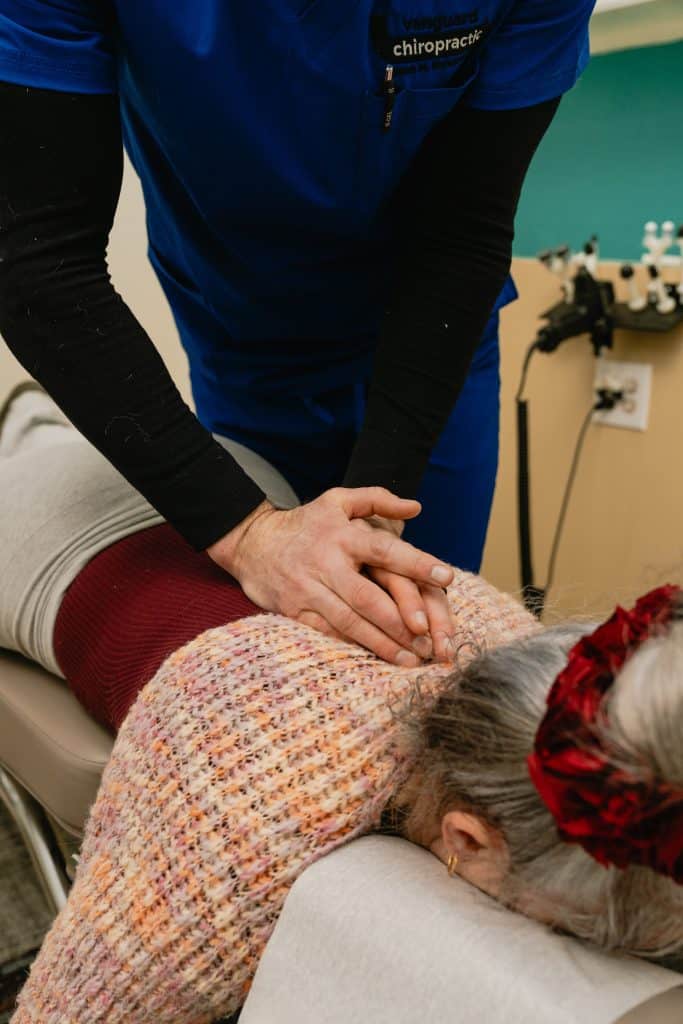
👉 a rigid, restricted thoracic spine
In many cases, it’s also hyperkyphotic-rounded forward-and lacking normal rotation.
Why the Thoracic Spine Matters So Much
The thoracic spine is where rotation is supposed to happen.
Not the low back.
The lumbar spine is only designed to rotate a very small amount-about 1/8 of an inch each direction under normal conditions.
But when the thoracic spine becomes stiff and immobile, something has to compensate.
So the body adapts.
The low back starts rotating more than it should-even during subtle, everyday movements like walking.
Over time, that creates stress where the body isn’t designed to handle it.
This pattern is one of the biggest reasons why back pain keeps coming back in so many people.
Why “Ribs Popping Out” Keeps Happening
If the thoracic spine is rigid, the rib cage can’t move the way it’s supposed to.
Even if a rib is adjusted and feels better temporarily, it’s still attached to a system that isn’t functioning correctly.
If the underlying thoracic restriction isn’t addressed, the problem tends to return.
How This Affects Your Neck
When the thoracic spine becomes rounded and stiff, the head can’t sit properly over the shoulders.
To keep your eyes level, the neck has to compensate by extending upward.
That creates:
- increased strain in the cervical spine
- overuse of the suboccipital muscles
- reduced normal function of those muscles
Those muscles are supposed to help with fine movement and coordination with the eyes.
Instead, they’re stuck working overtime just to hold your head up.
Over time, this can contribute to:
- neck tension
- reduced mobility
- tension headaches
- migraines
Why Shoulder Problems Show Up Too
Your shoulders don’t function independently.
They’re directly connected to structures that rely on proper thoracic spine positioning.
If the thoracic spine is:
- rigid
- rounded
- not rotating
…the shoulders are forced into a position where they can’t move efficiently.
That’s why it’s common to see shoulder issues alongside back and neck problems.
It’s All Connected
What feels like separate problems-back, hips, ribs, neck, and shoulders-are often part of the same underlying issue:
👉 restricted movement in the thoracic spine
If the thoracic spine isn’t moving, something else is forced to - and that’s where problems begin.
Why Back Pain Keeps Coming Back: The 5 Hidden Causes
If you’re trying to understand why back pain keeps coming back, it usually comes down to a combination of these five underlying issues:
1. Loss of Thoracic Spine Mobility
When the mid-back stops rotating properly, the lower back is forced to compensate. This creates excess stress where it shouldn’t be.
2. Pelvic Imbalance
If the pelvis isn’t moving evenly, it disrupts how force is distributed through the spine, leading to recurring strain and asymmetry.
One often-overlooked reason back pain keeps returning is lumbar spinal stenosis. The gradual narrowing of the spinal canal can create persistent symptoms that flare up with certain movements or prolonged standing.
3. Decreased Hip Mobility
Tight or restricted hips limit how your body absorbs movement. The lower back often takes on that extra load.
4. Altered Breathing Mechanics
Shallow or inefficient breathing changes pressure dynamics in the spine and core, increasing tension and reducing stability.
5. Compensating Muscle Patterns
When joints aren’t moving correctly, muscles try to compensate. Over time, this leads to fatigue, tightness, and recurring pain.
These issues don’t happen overnight.
They build gradually, and if they aren’t addressed, the cycle continues.
If these issues aren’t corrected, it’s easy to see why back pain keeps coming back over and over again.
Why Self-Treatment Falls Short
Some people try to stay ahead of it themselves:
- stretching routines
- mobility work
- self-adjusting
- constant “maintenance”
But without correcting joint function, those approaches don’t resolve the issue.
In many cases, they just keep the cycle going.
Why Back Pain Keeps Coming Back
Back pain keeps coming back because the underlying mechanics haven’t changed.
You can temporarily reduce tension.
You can temporarily feel better.
But if the joints are still restricted and movement patterns haven’t improved, the body will return to the same state.
Understanding why back pain keeps coming back is the first step toward actually fixing it.
Many people don’t know what to do in the moment when their back goes out, which can make things worse. Here’s exactly what to do when your back goes out.
Why Frequency Matters Early On
If a problem developed over time, it won’t resolve in one visit.
Muscles, tendons, and ligaments tend to return toward their previous state within 24-48 hours, especially if nothing else changes.
That’s physiology.
Early care isn’t about dependency, it’s about interrupting that cycle long enough to create change.
You have two options:
- temporary relief
- structural correction
Both are valid.
But they lead to very different outcomes.
Care doesn’t create dependency-unresolved dysfunction does.
The Real Objection: Time and Money
Most people don’t avoid care because they don’t understand it.
They avoid it because of:
- time
- money
Both are limited.
But here’s the reality:
People will spend money on:
- clothes
- shoes
- hair
- nails
- Botox
All to improve how they look.
But rarely stop to think:
👉 how much better would they look if their posture and movement actually improved?
When you think of models, what stands out?
It’s not just what they’re wearing.
It’s how they carry themselves:
- upright
- fluid
- balanced
- confident
Posture is part of appearance.
Movement is part of appearance.
In a way, people are always trying to “look better”…
but ignoring the one thing that actually changes how they look from every angle, their back.
You don’t have to call it anything dramatic.
But a strong, well-moving back is a big part of what people naturally associate with confidence, presence, and even attractiveness.
That’s the part most people overlook.
There’s a difference between covering something up, and improving what’s underneath.
If your structure isn’t functioning well, no amount of external effort fixes that.
And over time, ignoring it usually becomes more expensive, both physically and financially.
What Actually Fixes the Problem
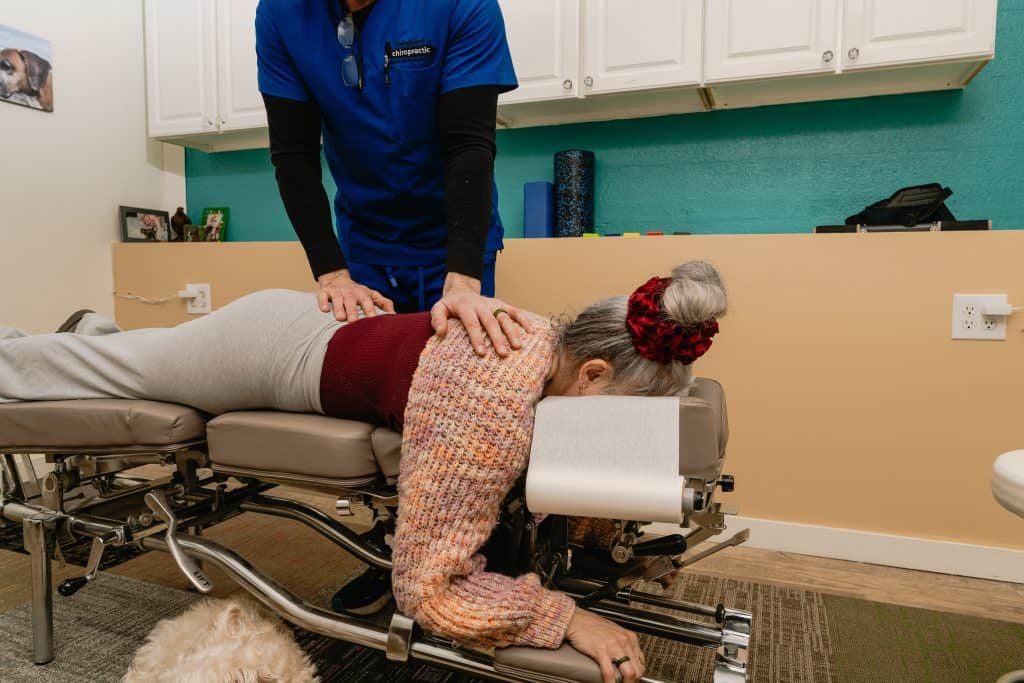
If the issue is mechanical, it has to be addressed mechanically.
Chiropractic care focuses on:
- restoring joint motion
- reducing mechanical stress
- improving movement patterns
When the spine, pelvis, and hips move correctly:
- tension decreases
- stability improves
- function returns
When to See a Chiropractor for Back Pain
If your back pain:
- keeps coming back
- limits movement
- affects your workouts
- interferes with daily life
…it’s time to address the cause.
Once you understand why back pain keeps coming back, the solution becomes much clearer.
If you’re looking for a back pain chiropractor in Tulsa, the goal isn’t temporary relief, it’s restoring how your body moves.
Get It Addressed
At Vanguard Chiropractic, we provide simple, walk-in care designed to improve movement and reduce the underlying causes of back pain.
✔$40 visits
✔ Walk-ins welcome
✔ No insurance required
👉 Walk in anytime or call: 918-948-7990
If you’re tired of dealing with the same problem over and over, it’s time to take a different approach.
Ready to Get This Fixed?
$40. Walk in. No appointment. Dr. Jason will evaluate your spine and give you a straight answer.
Medical Disclaimer: This content is for informational purposes and does not constitute medical advice. Individual results vary. If you are experiencing severe or worsening symptoms, consult a qualified physician. This page is not intended to diagnose, treat, cure, or prevent any disease.