
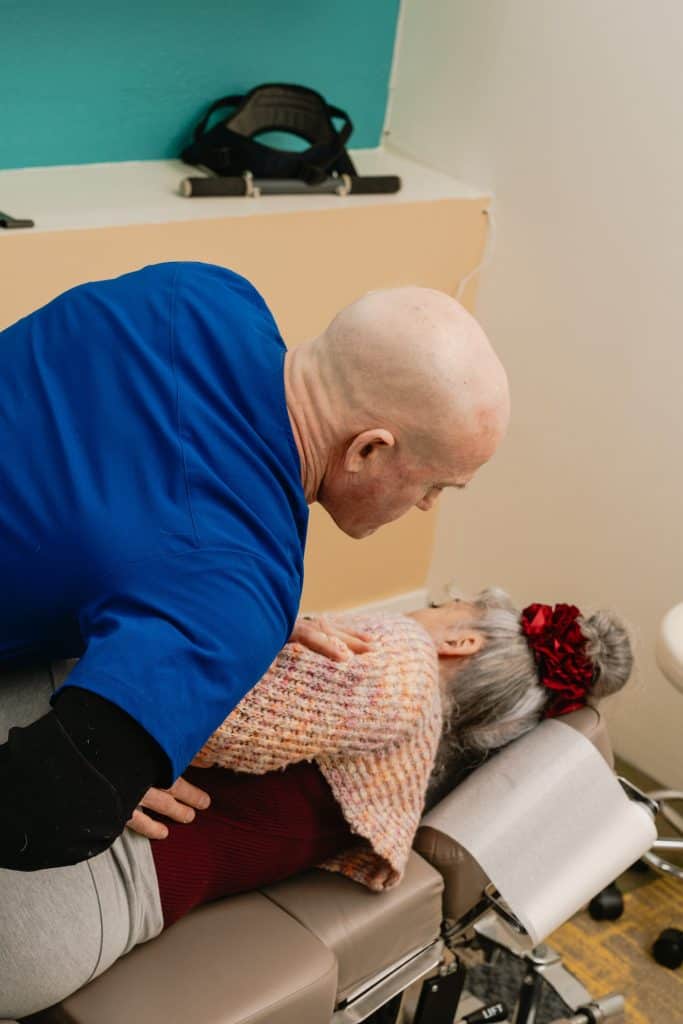
Knee Pain Chiropractor
in Tulsa: Move Without Pain Again
Knee pain that flares up with squats, stairs, running, or out of nowhere usually traces back to how your hips, ankles, and gait are working. As your knee pain chiropractor in Tulsa, I offer same-day $40 care to address the biomechanics driving the pain.
Honest scope: Chiropractic knee work is biomechanical. I treat hip mechanics, ankle mobility, gait, and the muscle compensations that drive most knee pain. I do not treat ACL or MCL tears, septic joints, or advanced knee arthritis. If your case needs an orthopedic surgeon, I will tell you and refer you out the same visit.
Recognizing the Problem
Reviewed by Dr. Jason Forward, DC · Licensed Chiropractor · Vanguard Chiropractic, Brookside Tulsa · Last reviewed:
Common Knee Pain Symptoms I Treat
Knee pain chiropractor in Tulsa - if that is what brought you here, the pain is probably interfering with stairs, squats, running, or just getting up off the floor. As a knee pain chiropractor in Tulsa, I see these patterns every week at Vanguard Chiropractic. Most of them have nothing to do with the knee joint itself. They start above or below it.
Knee pain rarely shows up alone. The hip on the same side is usually tight or weak. The ankle has lost mobility. The glutes are not firing on schedule. Here is what patients walk in with:
Pain Going Down Stairs
Sharp pain in the front of the knee with each step down. Classic patellofemoral pattern. The kneecap is not tracking properly.
Runner's Knee
Aching pain around or behind the kneecap that builds during a run. Hip and gluteal weakness almost always feeds this pattern.
Outer Knee Pain (IT Band)
Sharp or burning pain on the outside of the knee. The IT band gets blamed but the real driver is usually hip mechanics and tight glute medius.
Pain From Squats or Lifting
Knees cave inward, pain shows up at the bottom of the squat. Ankle mobility, hip rotation, and glute activation are usually the culprits.
Pain Without an Injury
Knee pain that started for no obvious reason. This is almost always a compensation pattern that has been building for months or years.
Clicking, Popping, or Catching
Mechanical sensations during movement. When they come with pain, the joint is not tracking the way it should.
Why It Happens
What Actually Causes Mechanical Knee Pain
Most knee pain is not a knee problem. It is a hip, ankle, and glute problem that is showing up at the knee. The knee is a hinge stuck between two ball joints - the hip above and the ankle below. When either of those loses normal motion, the knee absorbs forces it was not designed to handle. Patients searching for a knee pain chiropractor in Tulsa are usually dealing with this exact pattern.
- Hip mechanics gone bad. Tight hip flexors and weak glute medius pull the femur into internal rotation. The kneecap drifts off its track and grinds. This is the most common driver of patellofemoral pain I see.
- Ankle mobility loss. When the ankle cannot dorsiflex properly, the knee has to compensate during squats, stairs, and walking. Years of restricted ankle motion shows up as anterior knee pain.
- Glute shutdown. Sitting eight hours a day teaches the glutes to stay quiet. The hamstrings and quads take over. The knee gets dragged out of alignment with every step.
- Gait compensations. An old ankle sprain that never fully resolved. A back injury you forgot about. Your body learned to walk around the problem and the knee paid for it.
- IT band tension. The IT band itself is rarely the problem. It is responding to hip weakness and pelvic instability. Foam rolling the band without addressing the hip is a temporary fix.
- Training load mistakes. Sudden mileage jumps in running. Adding squat volume too fast in CrossFit or lifting. The tissue capacity did not match the demand and the knee broke first.
Research backs this up. A 2018 systematic review (Neal et al.) in the British Journal of Sports Medicine found that hip strength and hip mechanics directly predict patellofemoral pain. Treating the hip is treating the knee. The NINDS confirms that knee pain is one of the most common musculoskeletal complaints among adults in the United States.
The Approach
How a Knee Pain Chiropractor in Tulsa Can Help
Treatment for knee pain at Vanguard Chiropractic is biomechanical. I do not crack your knee. I find what is feeding the dysfunction - the hip, the ankle, the glute, the gait pattern - and I address it directly. A knee pain chiropractor in Tulsa who works the full kinetic chain gives you a real shot at resolving the pain instead of chasing it.
At Vanguard Chiropractic, knee pain treatment is structured around four targets:
Hip Adjustment and Mobilization
Restoring normal hip motion takes the rotational stress off the knee. When the femur tracks correctly, the kneecap follows. This is the highest-impact change for most knee pain patients.
Ankle Mobilization
Restricted ankles force the knees to compensate. Restoring dorsiflexion lets the squat, the lunge, and the walking gait happen without the knee taking the hit. Quick wins live here.
Soft Tissue Work
Glute medius, TFL, IT band, vastus lateralis, and the deep hip rotators. Pin-and-stretch work releases the tissue that keeps the knee pulled out of alignment between visits.
Gait and Movement Coaching
Squat patterns, running form, stair mechanics. Specific cues and homework so the knee does not get pulled back into the same dysfunction the moment you leave the office.
Knee pain is closely connected to hip pain, back pain, and sports injury patterns. When I treat a knee, I evaluate the whole chain. Lower back compensations and pelvic imbalance feed knee dysfunction in both directions. The other conditions I treat all share the same evaluation framework.
I do CrossFit at CrossFit Jenks. I have been through the same squat-related knee discomfort that brings most lifters in. Understanding the demands of the movement matters when figuring out what is actually driving the pain.
Who This Is For
Knee Pain From Training, Sitting, or Old Injuries
Whether your knee pain started after a mileage jump, built up over years at a desk, or showed up after months of squatting, restoring the kinetic chain is the path forward. If you are searching for a knee pain chiropractor in Tulsa because foam rolling and rest keep wearing off, this approach addresses why.
Important Safety Information
When Knee Pain Needs an Orthopedist or ER
Most knee pain is mechanical and responds well to chiropractic care. Some situations need a different specialist or immediate medical attention. Go to the emergency room or get an orthopedic referral if any of the following describe your situation:
- Acute trauma with deformity: Severe knee pain after a fall, twist, or impact, especially with visible deformity, inability to bear weight, or audible pop. Get imaging to rule out fracture or major ligament tear.
- Suspected ACL or MCL tear: Knee gave way under load, severe swelling within hours, instability when walking. This needs orthopedic evaluation and imaging, not chiropractic care.
- Locked knee: Knee that physically will not bend or straighten past a certain point. May indicate a meniscus tear with a displaced fragment requiring orthopedic evaluation.
- Hot, red, swollen knee with fever: Could indicate septic arthritis or joint infection. This is a same-day medical emergency. Go to the ER.
- Calf swelling or shortness of breath: Knee pain combined with calf swelling or trouble breathing may indicate a blood clot. Call your doctor or go to the ER immediately.
- Advanced osteoarthritis or post-surgical: Severe joint space loss, recent knee replacement, or post-surgical recovery should be coordinated with your orthopedic team.
If you are not sure whether your knee pain is mechanical or something more serious, call me at (918) 948-7990 and I can help you decide. I will always refer out when your situation calls for an orthopedic surgeon, sports medicine physician, or emergency evaluation.
Simple Pricing
Walk-In Knee Pain Chiropractor in Tulsa - No Hassle
No insurance. No appointment. No long-term contracts. Just $40 and same-day access. Learn more about my transparent pricing.
Knee pain affects roughly 25% of adults at some point and is one of the leading reasons people limit their activity, according to the CDC. Most mechanical knee pain responds well to early intervention when the underlying compensation patterns are addressed. You do not need a referral from another provider to be seen.
What Happens on Your First Visit
Your First Visit at Vanguard Chiropractic
You walk in during open hours. No appointment, no forms ahead of time. The whole visit takes about 20 to 30 minutes. Here is what happens once you sit down:
- Quick history. When did the knee pain start. What movements make it worse. Any old injuries to the knee, ankle, hip, or back. Training history if you are an athlete.
- Functional movement screen. Squat, single-leg stance, gait observation, ankle dorsiflexion check, hip range of motion. This tells me where the chain is breaking down.
- Hands-on evaluation. Palpation of the knee, hip, ankle, and lumbar spine. Identifying restricted joints and tight tissue. Ruling out red flags that need a different provider.
- Treatment. Adjustments and soft tissue work targeted to what the evaluation showed. Hip, ankle, and lumbar segments first. Direct knee work last and only when appropriate.
- Plan and homework. What I think is driving the pain, how many visits I expect this to take, and one or two specific things to do at home between visits. No long-term contract pressure.
Most patients feel a difference in the first or second visit. Acute patterns often resolve in 3 to 6 visits. Chronic compensation patterns that have been building for years take longer. I will tell you what I think and why on day one. More on what to expect on your first chiropractic visit.
Common Questions
Knee Pain Chiropractor in Tulsa - Frequently Asked Questions
Yes, when the knee pain is mechanical. Most knee pain is driven by hip mechanics, ankle mobility, glute activation, and gait patterns. Chiropractic care addresses all of those directly. A 2018 systematic review (Neal et al.) in the British Journal of Sports Medicine showed hip strength and hip mechanics directly predict patellofemoral knee pain. Treating the hip is treating the knee.
Almost all knee pain that shows up without an obvious injury is a compensation pattern that has been building. Tight hips, weak glutes, restricted ankles, or an old injury elsewhere that changed your gait. The knee was the first joint to get loud about it. The fix is upstream and downstream of the knee, not in the knee itself.
Often yes. Hip mechanics directly control knee tracking. Lower back dysfunction can alter pelvic position, which changes how the femur sits in the hip socket, which changes the angle of stress at the knee. A full chain evaluation tells me where the real driver is. Treating only the knee is why most people see no lasting change.
Both are classic patterns I treat. Runner's knee is almost always a hip and gluteal weakness problem. The IT band itself is rarely the issue - it is responding to instability above. Foam rolling the band feels like it helps but it does not address the cause. Hip strength, glute medius activation, and gait correction do.
It depends on the situation. Acute trauma with deformity, suspected ACL or MCL tear, locked knee, or severe swelling within hours of an injury - yes, get orthopedic evaluation first. Chronic mechanical pain without trauma, runner's knee, IT band issues, squat-related discomfort - chiropractic is a reasonable starting point. If I see something during evaluation that needs an orthopedic surgeon, I will tell you and refer you out the same day.
Acute knee pain addressed early often resolves in 3 to 6 visits. Chronic compensation patterns that have been developing for years take more consistent work. There are no long-term contracts at Vanguard Chiropractic. I will give you my honest read after the first evaluation, and you decide from there.
Most mechanical knee pain does not require imaging before starting care. The functional evaluation tells me a great deal. If something on the exam suggests a structural issue that imaging would change the plan for - meniscus tear with locking, suspected ligament tear, advanced arthritis - I will refer you for the appropriate workup before continuing.
Sometimes, when the patella or fibular head is restricted. But most knee work at Vanguard Chiropractic targets the hip, ankle, lumbar spine, and surrounding soft tissue. The knee is usually the victim of dysfunction above and below it. Working on the knee directly without addressing the chain rarely produces lasting change.
Ready to Move Without Knee Pain?
Walk-In Knee Pain Chiropractor in Tulsa - $40, Same Day
Walk in. Get evaluated. Restore the chain. Move forward. No contracts, no insurance, no waiting.
Mon-Fri 10am-7pm | Sat 10am-2pm | Sun Closed
@vanguard_chiro on Instagram
Disclaimer: Results vary by individual. Chiropractic care addresses musculoskeletal conditions within the scope of chiropractic practice as licensed in Oklahoma. Individual results vary. If you are experiencing acute trauma, suspected ligament tear, locked knee, fever with a hot swollen joint, or symptoms outside the musculoskeletal system, seek emergency or orthopedic care. Dr. Jason Forward will always refer out when your condition requires a different level of care.