
Mobility Chiropractor in Tulsa
Move Without Restriction
Joint restriction is the reason stretching is not working. As a mobility chiropractor in Tulsa, Dr. Jason Forward at Vanguard Chiropractic restores the joint mechanics that stretching cannot reach. Same-day $40 care, no appointment needed.
Recognizing the Problem
Signs Your Mobility Is Being Limited by Joint Restriction
Mobility chiropractor in Tulsa - if that is what you searched, something has been limiting your movement for a while. As a mobility chiropractor in Tulsa, Dr. Jason Forward sees these patterns every day at Vanguard Chiropractic. Most people assume they are just tight. The real problem is almost always the joint.
Mobility restriction does not stay in one area. It creates compensation patterns that spread through the entire chain. Here is what patients typically come in with:
Joint Stiffness
Persistent stiffness in the spine, hips, or shoulders that does not improve no matter how much you stretch or foam roll.
Limited Range of Motion
Can not reach overhead fully, rotate your trunk, or squat to depth. The joint stops you before the muscle does.
Pain with Movement
Sharp or aching pain when you move through certain ranges. Your body is guarding a restricted joint and punishing you for pushing through it.
Morning Tightness
Wake up feeling locked up every morning. Takes 30 minutes or more just to feel like you can move normally. Joints stiffen overnight when restriction is present.
Can Not Squat or Bend Properly
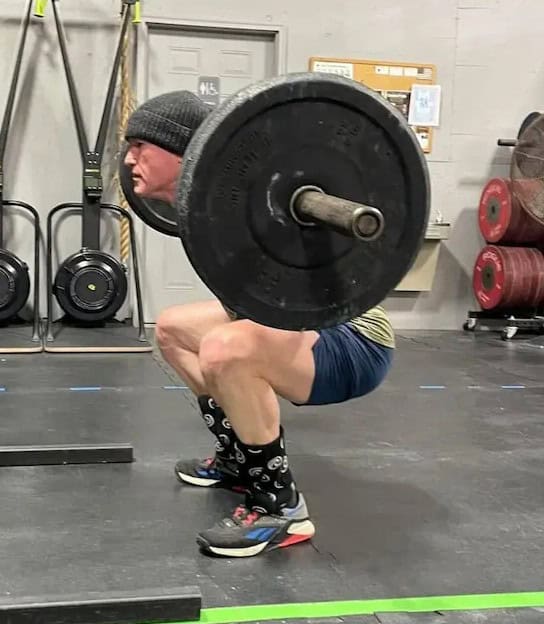
Heels come up, knees cave in, or you can not get to depth. Ankle, hip, or thoracic restriction is almost always the root cause.
Loss of Flexibility Over Time
Gradual loss of range that gets worse year after year. Stretching maintains but never improves it. The joint capsule is the limiter, not the muscle.
Why It Happens
What Actually Causes Mobility Loss
Mobility restriction is rarely caused by one thing. It builds over time from repeated mechanical stress, prolonged positioning, and unresolved injuries. Patients searching for a mobility chiropractor in Tulsa are usually dealing with a combination of these factors without realizing how they compound.
- Joint restriction. When a joint loses its normal arthrokinematic motion, the capsule tightens and the surrounding muscles guard. No amount of stretching reaches the joint capsule. Only direct mobilization restores it.
- Adhesions and scar tissue. Previous injuries, repetitive movements, and chronic tension create adhesions in the soft tissue surrounding joints. These adhesions physically limit how far the joint can move.
- Muscle guarding. When a joint is restricted, the muscles surrounding it tighten reflexively to protect it. This is why you feel tight but stretching does not fix it. The tightness is a symptom of the joint problem, not the cause.
- Sedentary lifestyle. Prolonged sitting compresses the thoracic spine, tightens the hip flexors, and restricts the SI joints. Hours at a desk without movement creates predictable restriction patterns that worsen over months and years.
- Normal aging. Joint capsules stiffen naturally with age. Cartilage thins. Synovial fluid production decreases. Without regular joint movement through full ranges, these changes accelerate.
- Previous injuries not fully resolved. An old ankle sprain, a back injury from years ago, a shoulder that never fully recovered. Joints that were never restored to full function continue to restrict and create compensation patterns long after the pain is gone.
The Approach
How a Mobility Chiropractor in Tulsa Restores Your Movement
Mobility is not flexibility. Flexibility is about tissue length. Mobility is your body's ability to control movement through a full range of motion under load. You can be flexible and still move terribly. A mobility chiropractor in Tulsa addresses the joint mechanics that stretching programs miss entirely.
At Vanguard Chiropractic, treatment for mobility restriction is deliberate and structured:
Joint Mobilization
Direct mobilization of restricted joints restores the arthrokinematic motion that stretching cannot reach. The ankle, thoracic spine, SI joint, and hip are the most common targets. One session often produces more visible range of motion change than months of passive stretching.
Spinal Adjustment
The thoracic spine controls rotation and overhead positioning. The lumbar spine and pelvis control squat depth and hip function. Restoring segmental motion in the spine changes how the entire body moves above and below.
Soft Tissue Work
Pin-and-stretch technique applied to the muscles guarding restricted joints. When the joint is restored, the muscle guarding releases. Treating both together is what makes the change hold.
Movement Assessment
Every visit starts with watching you move. The squat, the overhead reach, the rotation test. These patterns reveal where the chain is breaking down far more accurately than asking where something hurts.
Mobility restriction is closely connected to back pain, hip pain, and shoulder pain. When we treat mobility, we evaluate the whole chain. That is what makes the results hold.
According to the American College of Physicians (Qaseem et al., 2017), spinal manipulation is recommended as a first-line treatment for musculoskeletal pain before resorting to medication or invasive procedures. A 2010 systematic review by Bronfort et al. found that spinal manipulation and mobilization are effective for a range of musculoskeletal conditions, with strong evidence supporting improved joint function and pain reduction. Your nervous system function is directly connected to how well your joints move.
Who This Is For
Mobility Restriction That Stretching Cannot Fix - We Can Help
Whether your mobility has been declining for years, plateaued despite consistent stretching, or dropped after an injury, restoring joint mechanics is the missing piece. If you are searching for a mobility chiropractor in Tulsa because nothing else has worked, this is the approach that addresses why.
Important Safety Information
When Mobility Loss Needs Emergency Care
Most mobility restriction is mechanical and responds well to chiropractic care. But some situations require immediate medical attention. Go to the emergency room or call 911 if you experience any of the following:
- Sudden loss of movement after trauma: Inability to move a joint after a fall, car accident, or direct impact. This may indicate fracture or dislocation requiring immediate imaging.
- Joint locking that will not release: A joint that is completely locked and cannot be moved in any direction despite effort. Mechanical locking from a loose body or meniscal tear may need urgent evaluation.
- Severe swelling with immobility: Rapid swelling, heat, and redness in a joint accompanied by inability to bear weight or use the limb. This may indicate fracture, infection, or acute inflammatory condition.
- Neurological symptoms with movement loss: Numbness, tingling, or weakness in the arms or legs that appears alongside mobility restriction. Progressive neurological changes need same-day medical evaluation.
- Rapid deterioration of function: Movement ability that is getting noticeably worse day by day rather than staying stable or slowly declining. Rapid functional loss warrants medical workup to rule out systemic or neurological causes.
If you are unsure whether your mobility loss is an emergency, call us at (918) 948-7990 and we can help you determine the right next step. Dr. Jason Forward will always refer out when your situation requires a different level of care.
Simple Pricing
Walk-In Mobility Chiropractor in Tulsa - No Hassle
No insurance. No appointment. No long-term contracts. Just $40 and same-day access to the care you need.
Musculoskeletal conditions including joint stiffness and mobility restriction affect millions of adults each year. According to the American College of Physicians, spinal manipulation and non-pharmacologic therapies should be the first approach before medication. Most mobility cases respond well to early chiropractic intervention.
Common Questions
Mobility Chiropractor in Tulsa - Frequently Asked Questions
Yes. Mobility restriction is most often driven by joint capsule tightness and segmental restriction that stretching cannot reach. Chiropractic adjustments restore the arthrokinematic motion inside the joint itself. A 2010 systematic review by Bronfort et al. found strong evidence that spinal manipulation improves joint function and range of motion. Most patients notice measurable changes after just one or two visits.
Stretching works on muscle tissue. If the limiter is the joint capsule, ligamentous restraint, or articular restriction, stretching will never reach it. This is the most common reason people stretch consistently for months or years with no meaningful improvement. The muscle is not the problem. The joint is. A mobility chiropractor in Tulsa addresses the layer that stretching programs miss.
The most commonly restricted joints in active adults are the ankle, thoracic spine, SI joint, hip, and shoulder. Each creates predictable compensation patterns when restricted. The ankle affects squat depth and lower body mechanics. The thoracic spine affects overhead position and rotation. The SI joint affects pelvic symmetry and hip function. Dr. Forward evaluates the full chain to find where the restriction actually is, not just where you feel it.
Many patients see measurable range of motion changes after the first visit. How many visits it takes to make those changes stable depends on how long the restriction has been building and how many compensations are layered on top of it. Recent restrictions often resolve within two to four visits. Long-standing patterns take more time. There are no contracts at Vanguard Chiropractic. You come in when you need care.
No referral, no insurance, no prior authorization. Walk in during open hours, pay $40, and get treated. HSA and FSA cards are accepted. That is the whole process. No forms, no waiting for approvals, no surprise bills. Learn more about what to expect on your first visit or see our cost page for details.
Every chiropractor works with joint mechanics. The difference is the evaluation approach. A mobility-focused chiropractor starts with movement, not symptoms. Dr. Forward watches how your body moves through the patterns that are limiting you and identifies where the mechanical chain is breaking. Pain is almost always downstream of the actual restriction. The assessment is about finding where the chain breaks, then adjusting that specific area.
Yes. Joint capsules stiffen naturally with age, but much of the mobility loss people attribute to getting older is actually treatable joint restriction sitting on top of the normal aging process. Restoring joint mechanics will not reverse aging, but it can recover a significant amount of range of motion that you assumed was permanently lost. Many older patients are surprised by how much movement returns after just a few sessions.
If joint restriction is limiting your movement, restoring that motion directly improves your ability to perform. Squat depth, overhead position, rotation, hip extension - all of these improve when the joint restriction causing the limitation is addressed. Dr. Forward trains at CrossFit Jenks and understands exactly how joint restriction affects performance in functional fitness, running, and sport-specific movements. See our CrossFit mobility guide for more.
Ready to Move Again?
Walk-In Mobility Chiropractor in Tulsa - $40, Same Day
Walk in. Get evaluated. Restore motion. Move without restriction. No contracts, no insurance, no waiting.
Mon-Fri 10am-7pm | Sat 10am-2pm | Sun Closed
@vanguard_chiro on Instagram
Disclaimer: Results vary by individual. Chiropractic care addresses mechanical joint function and is not a substitute for medical diagnosis or treatment. If you are experiencing red flag symptoms including neurological changes, joint locking after trauma, or rapid functional decline, seek emergency care immediately. Dr. Jason Forward will always refer out when your condition requires a different level of care.
Related Reading
- CrossFit chiropractor in Tulsa - complete guide
- CrossFit mobility chiropractor in Tulsa
- Chiropractor for runners in Tulsa
- Back pain chiropractor in Tulsa
- Neck pain chiropractor in Tulsa
- Shoulder pain chiropractor in Tulsa
- Hip pain chiropractor in Tulsa
- Sports injury chiropractor in Tulsa
- Walk-in chiropractor in Tulsa
- Chiropractor near me in Tulsa
- Chiropractor cost in Tulsa
- What to expect on your first visit
- All conditions we treat
- Is chiropractic safe?
- Nervous system and chiropractic
Peer-reviewed sources for Mobility
- CDC: Physical activity for adults. CDC guidance on movement, range-of-motion, and mobility maintenance across the lifespan.
- NIH NIAMS: Joint health. NIH reference on joint anatomy, common mobility-limiting conditions, and conservative care.
- WHO: Physical activity guidelines. World Health Organization recommendations on weekly activity volume for adults.
References last reviewed 2026-05-08.