
The Short Answer
CrossFit athletes need a chiropractor who actually trains. Dr. Jason trains at CrossFit Jenks and understands movement dysfunction.
Walk in for a $40 evaluation. No appointment needed.
Mon-Fri 10am-7pm | Sat 10am-2pm | Brookside Tulsa
If you do CrossFit in Tulsa and you are not seeing a crossfit chiropractor in Tulsa regularly, you are leaving performance on the table and recovery time on the floor.
CrossFit is one of the most demanding training styles out there. It is also one of the most rewarding. But the combination of high intensity work, heavy compound lifts, and repeated overhead movement creates a very specific kind of stress on the spine, shoulders, hips, and knees that standard rest and stretching does not fully address.
Knowing the right crossfit chiropractor in Tulsa can be the difference between staying healthy and training consistently or spending weeks on the sideline.
Table of Contents
1. CrossFit Hits the Spine Hard
Research published through PubMed found that the shoulder, spine, and knee are the most commonly injured areas in CrossFit athletes. The spine alone accounts for nearly 25 percent of all CrossFit related injuries.
Deadlifts, cleans, snatches, wall balls, and high rep rowing all load the lumbar spine repeatedly. If even one spinal segment is restricted and not moving correctly, the joints above and below it compensate. Over time that compensation builds into the kind of back pain that sidelines athletes for weeks.
A crossfit chiropractor in Tulsa who understands those movement patterns can identify restrictions before they become injuries.
2. Overhead Work Requires a Spine That Actually Moves
Overhead squats, push jerks, handstand pushups, and pull-ups all demand full thoracic mobility. If your mid-back is stiff and restricted, your shoulders have to compensate on every single rep. That is where impingement starts. That is where rotator cuff problems develop.
Shoulder pain is one of the most common reasons CrossFit athletes stop training. And in most cases the shoulder is not actually the primary problem. The thoracic spine restriction driving it is.
Getting adjusted regularly keeps the thoracic spine rotating the way it is supposed to so your shoulders can do their job without taking on extra load they were never designed to handle.
3. Recovery Is Where Gains Are Made
You do not get stronger during the WOD. You get stronger during recovery. And the faster your body recovers, the more you can train.
Research published through PubMed reviewed seven clinical trials on spinal manipulative therapy in athletes and found that four of those studies showed meaningful improvement in golf chiropractors performance tests following adjustments. The neurophysiological effects of spinal manipulation on muscle bone density research and cortical drive are real and measurable.
That means less soreness between sessions, better range of motion going into each workout, and fewer compensations building up over time.
Sports injury chiropractic care is not just for when you get hurt. It is what keeps you from getting hurt in the first place.
4. Hip Mobility Directly Affects Your Squat
Every squat variation in CrossFit demands full hip mobility. Front squat, back squat, overhead squat, squat clean, thruster - they all require the hips to move freely and evenly through full depth.
When one hip is restricted, the pelvis tilts. The lumbar spine compensates. The knees track incorrectly. And the pattern gets worse with every rep.
Getting your hips assessed and adjusted as part of a regular maintenance routine is one of the highest use things a CrossFit athlete can do for long term performance and joint health. Pair that with the mobility work Dr. Jason focuses on and you will move better in ways that show up directly in your lifts.
5. Dr. Jason Understands CrossFit From the Inside
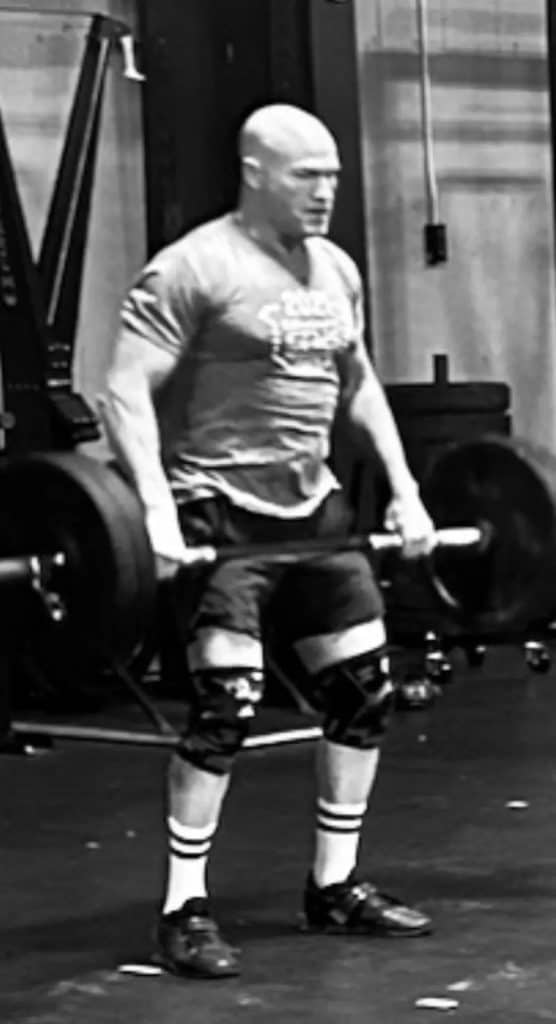
This is not a crossfit chiropractor in Tulsa who read about CrossFit. Dr. Jason Forward DC has been doing CrossFit since 2021. He knows what a heavy clean feels like on the lower back. He knows what happens to the thoracic spine after a week of heavy overhead work. He knows the difference between normal post-WOD soreness and something that needs to be addressed before it turns into a real problem.
When you come in as a CrossFit athlete, you are not explaining your training to someone who has never done it. You are talking to someone who trains the same way you do and understands your body and your goals.
Read more about why back pain keeps coming back if you are dealing with a pattern that keeps repeating no matter what you do. And check the sports injury page for more on how Dr. Jason approaches athlete care specifically.
Common CrossFit Injuries I See in Tulsa
Most CrossFit injuries are not freak accidents. They are mechanical patterns that build over weeks. Catch the pattern early, the fix is fast. Wait until something tears or pinches a nerve, the fix is longer. Here are the five I see most often at Vanguard Chiropractic.
1. Lower back pain after deadlift or clean week. The lumbar spine takes the brunt of every heavy pull. When the hips do not extend evenly, the low back compensates. Stiffness shows up the day after the WOD. Sharp pain shows up two days later when you bend to tie your shoes. The fix is rarely the spot that hurts. It is usually a hip restriction or a thoracic segment that is not rotating, forcing the lumbar spine to do work it was not built for. See the back pain chiropractor in Tulsa page for full detail.
2. Rotator cuff issues from kipping pull-ups and overhead work. The shoulder is a high-mobility joint that depends on the thoracic spine to set the table. If your mid-back will not rotate or extend properly, the shoulder makes up the difference on every pull-up, every snatch, every push press. Impingement is the early warning. A torn supraspinatus is the late warning. The fix is upstream: free up the thoracic spine and the shoulder usually clears within a few visits. See the shoulder pain chiropractor in Tulsa guide.
3. Wrist pain from front rack position. The front rack demands wrist extension and shoulder external rotation simultaneously. If either is restricted, the wrist takes the load. Cleans, thrusters, and front squats become painful. The fix is not always at the wrist; sometimes the upper thoracic and shoulder need to mobilize first.
4. Knee tracking issues during squat depth. Knees caving in during a squat almost never come from the knee. They come from a hip that does not externally rotate, an ankle that does not dorsiflex, or a thoracic spine pulling the trunk forward. The knee is just along for the ride. See hip pain in Tulsa and conditions we treat for the related diagnoses.
5. Costovertebral rib pain from front rack and overhead. A sharp catch in the upper back, especially when breathing deep after a heavy WOD, is often a rib head out of position at its costovertebral joint. It mimics serious things and feels alarming. It is also one of the fastest fixes in the room. See rib pain from front rack for the specific mechanism.
5-Minute Pre-WOD Mobility Check
Before you load a barbell, run this five-minute self-check. If any one of these moves restricted, scale the WOD or modify the movement. Pushing through restriction is how chronic problems start.
Hip rotation (open and closed). Sit on the floor, knees bent, feet flat. Drop both knees to one side. Then both to the other. If one side is noticeably tighter, your squat depth and pelvic tracking will be off today. Spend two minutes on the tight side before loading.
Thoracic rotation. On all fours, hand behind your head, rotate that elbow up to the ceiling. Both sides should clear past 60 degrees. If you cannot, your overhead positions today will be compensated through the lumbar spine and shoulders.
Shoulder flexion. Lie on your back, arms at your sides, knees bent and feet flat. Without arching your back, raise both arms overhead. If your hands cannot touch the floor without your low back lifting, scale the overhead work today.
Ankle dorsiflexion. Half-kneeling against a wall. Drive your front knee toward the wall while keeping the heel down. You should reach the wall with the toes 4 inches back. If not, your squat depth comes from the lumbar spine instead of the ankles, and the back pays the bill.
If two or more of these are restricted on the same day, that is a good signal to come in for an adjustment before the next heavy day. Walk-in, $40, no appointment needed.
What a Visit Looks Like
You walk in. No appointment needed. Dr. Jason evaluates your spine, hips, and shoulders based on what you are dealing with. If you are coming in beat up from a heavy week, he addresses the restrictions driving the compensation. If you are coming in for maintenance before competition, the focus is on making sure everything is moving freely and nothing is building toward a problem.
The whole visit takes about 10 to 15 minutes. You walk out moving better than you walked in.
Check the contact page for hours or the FAQ page if you have questions before coming in.
Frequently Asked Questions
How often should a CrossFitter see a chiropractor?
For most athletes training 4-5 days per week, every 2-4 weeks works. If you are in a heavy testing block or competition prep, weekly is reasonable. The cue is not the calendar; it is whether your mobility check is clearing both sides evenly. If it is, stretch your visits. If it is not, come in.
Can chiropractic care help with deadlift back pain?
Often yes, when the back pain is mechanical (joint restriction, muscle compensation, hip stiffness). It will not help if there is a true disc herniation with neurological signs (numbness, tingling, foot drop). Those need imaging first. A first visit clarifies which one you have before we do anything.
Will an adjustment fix my shoulder pain from kipping pull-ups?
It depends on the cause. If your shoulder pain is driven by thoracic stiffness or scapular dysfunction, an adjustment that frees up the thoracic spine often resolves the shoulder within a few visits. If you have an actual rotator cuff tear, that needs different care. Honest evaluation comes first.
Should I see a chiropractor before or after a heavy week?
Before is preventive: clearing restrictions so the heavy work loads correctly. After is restorative: addressing whatever did not move well during the work. Both are valid. If you only have time for one, I prefer before, because it changes how the heavy work loads your spine.
Is chiropractic safe with heavy lifting?
Yes, when delivered by a chiropractor who understands lifting mechanics. The risk profile of spinal manipulation in physically active adults has been studied in multiple systematic reviews and is low. The bigger risk is loading a restricted spine without addressing the restriction first.
How long until I feel better?
Acute restrictions often clear in 1-3 visits. Chronic patterns that built up over a year of heavy training take longer; usually 4-8 visits to fully reset, plus ongoing maintenance every few weeks. We are honest with you about which category your situation falls into at the first visit.
Can I do CrossFit the same day as an adjustment?
Usually yes, especially if the adjustment is preventive. After a major correction, taking the WOD intensity down 20% for that one session is a good idea. The next day, train normal.
Walk In Today
Vanguard Chiropractic | 1334 E. 41st Street, Tulsa OK 74105 | 918.948.7990
No appointment. No insurance. $40 flat rate. Walk in any time during open hours.
If you are serious about your training, be serious about your recovery. A crossfit chiropractor in Tulsa who actually trains CrossFit is a resource most athletes in Tulsa do not even know they have.
Ready to Get This Fixed?
$40. Walk in. No appointment. Dr. Jason will evaluate your spine and give you a straight answer.
Call 918-948-7990Medical Disclaimer: This content is for informational purposes and does not constitute medical advice. Individual results vary. If you are experiencing severe or worsening symptoms, consult a qualified physician. This page is not intended to diagnose, treat, cure, or prevent any disease.