
Plantar fasciitis is one of the most common complaints we see in athletes. Read more about chiropractic treatment for plantar fasciitis in Tulsa.
CrossFit Did Not Injure You.
The Dysfunction You Brought to It Did.
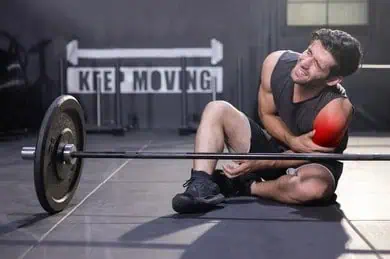
As a sports injury chiropractor in Tulsa, the most important thing I tell CrossFit athletes is this: the kipping pull-up did not tear up your shoulder. The deadlift did not wreck your back. The dysfunction that was already there, loaded under a barbell, at high volume, over hundreds of reps, did that. Here is what is actually happening in the three most common CrossFit injuries and what actually changes the pattern.
No insurance required
$40 flat every visit
Same day care
Written From Inside the Sport
Why CrossFit Athletes Keep Getting the Same Injury in the Same Spot
As a sports injury chiropractor in Tulsa who has been doing CrossFit since 2021, starting at CrossFit Hammered Steel in Hernando Mississippi, training at CrossFit Roots in Colorado in 2022, and training at CrossFit Jenks in Tulsa since 2023, I have watched a pattern repeat itself constantly. An athlete gets hurt. They rest. They come back. They get hurt in the same spot again. The injury is not random. The body is telling them something specific and nobody is listening to what it is actually saying.
This is the core truth every sports injury chiropractor in Tulsa works from. The movement did not cause the injury. The movement revealed a dysfunction that was already there. That dysfunction accumulated over weeks or months of training until the load, volume, or fatigue finally exceeded what the compromised mechanics could handle. One rep did not do this. A thousand reps on a body that was already compensating did this.
“Every injury I see in a CrossFit athlete has a mechanical story that starts well before the injury happened. The tear, the spasm, the impingement are the last chapter. The restriction and compensation are the first chapter. We never talk about the first chapter.”
The 3 Most Common CrossFit Injuries
3 CrossFit Injuries a Sports Injury Chiropractor in Tulsa Sees Every Week
These are not freak accidents. They are predictable mechanical failures that happen when a restricted, asymmetric, or poorly prepared body gets loaded under the demands of functional fitness training. Every one of them has a mechanical story. Every one of them responds to the right mechanical intervention.
The Cycle That Keeps Athletes Stuck
Why Rest Is Not Enough and a Sports Injury Chiropractor in Tulsa Addresses the Real Cause
When athletes come to see a sports injury chiropractor in Tulsa, the most common thing they say is some version of: I keep getting hurt in the same spot. The standard protocol for a CrossFit injury is: stop the aggravating movement, rest, let it calm down, return to training. This works well enough to get the athlete back in the gym. It does almost nothing to address what caused the injury in the first place. The restriction is still there. The compensation pattern is still there. The asymmetry in loading is still there. The only thing that changed is the inflammation calmed down and the nervous system stopped guarding as aggressively.
The moment training volume returns to where it was, the same pattern reasserts itself under the same loads. The same spot gets irritated. The athlete concludes they have a chronic problem and starts modifying movements permanently. That is not a chronic problem. That is an unresolved mechanical problem that keeps getting reloaded.
Rest treats the inflammation. A sports injury chiropractor in Tulsa addresses the restriction that caused it. Chiropractic addresses the restriction that caused the inflammation to accumulate in the first place. Those are two completely different interventions. You need both. The rest alone is why the injury keeps coming back.
Every sports injury chiropractor in Tulsa who works with CrossFit athletes regularly understands this distinction. The goal is not to manage the symptom. The goal is to find and clear the mechanical restriction that allowed the symptom to develop, so the athlete can return to full training without rebuilding the same compensation pattern from scratch.
What the Evaluation Actually Covers
How a Sports Injury Chiropractor in Tulsa Looks at a CrossFit Athlete
When a CrossFit athlete walks into Vanguard Chiropractic to see a sports injury chiropractor in Tulsa with a sports injury, the evaluation does not start at the site of pain. Pain is almost always downstream of the actual problem. The evaluation starts with the mechanics of the whole system.
After the evaluation, adjustment is applied to the specific segments that are restricted. For CrossFit athletes this most commonly involves the thoracic spine, the sacroiliac joints, and the lumbar spine. In many cases the shoulder, hip, or ankle joint itself also receives direct mobilization. The goal in every session is to restore normal mechanical function at the source of the problem so the tissue around it has a chance to recover instead of continuing to absorb compensatory load.
As a sports injury chiropractor in Tulsa, the model at Vanguard Chiropractic is simple. Walk in. Get evaluated. Get adjusted if appropriate. Leave with a clear understanding of what is happening mechanically and what to do next. $40. No appointment. No long-term treatment plan required.
Know When to Go Elsewhere
When to Skip the Chiropractor and Go Directly to Emergency Care
The most important thing a sports injury chiropractor in Tulsa can do for a CrossFit athlete is help them understand the difference between a mechanical injury that responds to care and a traumatic injury that requires emergency attention. Sports injuries in CrossFit athletes are almost always mechanical and appropriate for chiropractic evaluation. There are exceptions that require immediate medical attention. If any of the following apply, do not come to this office. Go directly to an emergency provider or your primary care physician.
- A visible deformity, pop, or snap followed by immediate inability to load the joint
- Numbness, tingling, or weakness in the arm or leg following a spine or shoulder injury
- Shoulder or hip pain after a fall, collision, or direct impact at high velocity
- Severe headache immediately following a neck injury or head contact
- Any change in bowel or bladder function after a back injury
- Fever accompanying a joint injury with no clear mechanical cause
If your injury does not include red flag symptoms, if this is a familiar pattern of shoulder irritation from kipping, low back pain after heavy pulls, or hip pain from squatting, that is a mechanical problem. That is exactly what a sports injury chiropractor in Tulsa is built to evaluate. Walk in during open hours and get it looked at before the next training session layers more load on top of it.
Knee injuries from training are more common than most athletes realize. If you are dealing with persistent knee issues, find out how we treat knee pain at our Tulsa clinic.
More From Vanguard Chiropractic
Hip PainHip Pain Chiropractor Tulsa
MobilityMobility Chiropractor Tulsa
Shoulder PainShoulder Pain Chiropractor Tulsa
Back PainBack Pain Chiropractor Tulsa
SciaticaSciatica Chiropractor Tulsa
Neck PainNeck Pain Chiropractor Tulsa
HeadachesHeadache Chiropractor Tulsa
Bulging DiscBulging Disc Chiropractor Tulsa
PricingChiropractor Cost Tulsa
No InsuranceChiropractor Without Insurance Tulsa
AboutMeet Dr. Jason Forward DC
Stop Resting the Same Injury and Getting the Same Result.
Walk in at 1334 E. 41st Street in Brookside Tulsa. $40 flat. No appointment. No insurance required. Dr. Jason Forward DC evaluates every patient personally. Open Monday through Friday 10am to 7pm and Saturday 10am to 2pm.
This post is written for informational purposes and does not constitute medical advice. Acute traumatic injuries, fractures, dislocations, and neurological symptoms require emergency medical evaluation. For published research on CrossFit injury patterns and upper extremity injuries, see this peer-reviewed clinical review published in PMC. If you are unsure whether chiropractic care is appropriate for your situation, consult with a licensed healthcare provider before your visit.