
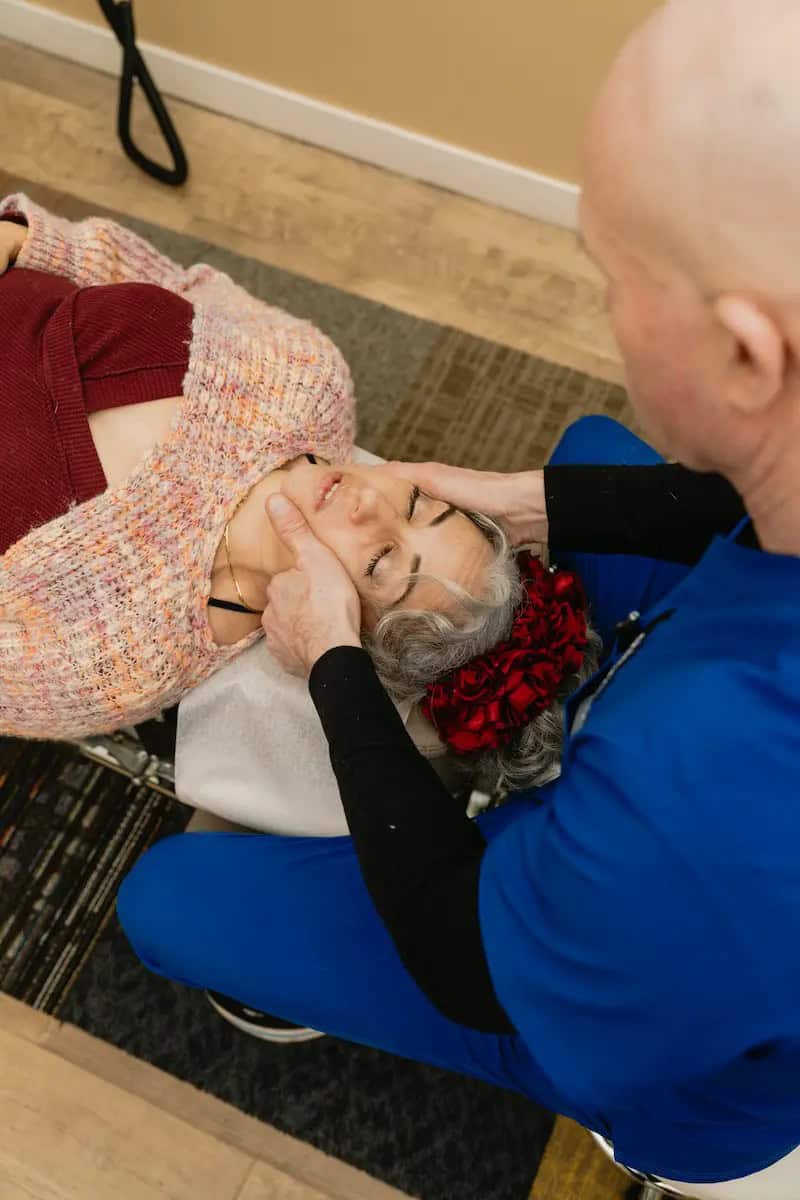
TMJ Chiropractor
in Tulsa: Quiet the Jaw, Free the Neck
Jaw pain, clicking, and headaches that wrap from the neck around the temples often share one driver: a stiff upper cervical spine pulling on the muscles that control the jaw. As a TMJ chiropractor in Tulsa, Dr. Jason Forward addresses the jaw and the neck together for $40 a visit.
Recognizing the Problem
Reviewed by Dr. Jason Forward, DC · Licensed Chiropractor · Vanguard Chiropractic, Brookside Tulsa · Last reviewed:
Common TMJ Symptoms I See Every Week
TMJ chiropractor in Tulsa - if that is what you searched, the jaw has probably been bothering you for a while. Most patients arrive after months of clicking, tension, and tight chewing muscles. Some have already tried a night guard. Some have already seen a dentist. Most have not had anyone evaluate the upper cervical spine, which is where a real chunk of jaw symptoms actually originate.
The temporomandibular joint sits a quarter inch in front of the ear canal. It is one of the most-used joints in the body. Every word, every meal, every yawn loads it. When the jaw and the neck stop coordinating, symptoms show up in places people rarely connect to the mouth.
Jaw Clicking or Popping
That click when you open wide or chew. The disc inside the joint is not tracking smoothly. This is the most common TMJ complaint I see.
Headaches at the Temples
Headaches that wrap from the base of the skull to the temples often involve the temporalis muscle, which is doing extra work to stabilize the jaw.
Locked or Stuck Jaw
The jaw catches mid-open. Sometimes it locks for a moment before releasing. The disc is getting trapped in front of the joint.
Tight Chewing Muscles
The masseter and temporalis stay clenched. Chewing tough food makes everything worse. Many patients have been clenching for years without realizing it.
Pain Referral Into the Ear
Ear fullness, mild tinnitus, or pressure with no infection. The joint sits right next to the ear canal and refers pain there constantly.
Neck Stiffness With Jaw Pain
If your neck is stiff and your jaw hurts on the same side, the upper cervical spine is almost always part of the picture.
Why It Happens
What Actually Drives Jaw Dysfunction
TMJ disorder is rarely a single failure of the joint itself. It builds when several systems stop working together. The chewing muscles overtune. The upper neck stiffens. Posture pulls the head forward. Stress raises baseline clench tone overnight. Patients searching for a TMJ chiropractor in Tulsa are usually living inside one of these layered patterns without realizing it.
One mechanism that gets missed by jaw-only treatment: the trigeminal-cervical nucleus. Sensory nerves from the upper three cervical segments converge with the trigeminal nerve in the brainstem. When a stiff C1, C2, or C3 segment fires constant pain signals, the brain often refers that input out along trigeminal branches and the patient feels it in the jaw, temple, or face. This is the same convergence that drives cervicogenic headache.
- Upper cervical restriction. A stiff C1 or C2 segment alters tone in the muscles that control the jaw and refers pain through trigeminal-cervical convergence. This is the missing layer in most TMJ care.
- Forward head posture. When the head sits in front of the shoulders, the suboccipital muscles tighten, the hyoid is pulled down, and the jaw cannot close cleanly. Hours at a desk drives this pattern.
- Masseter and temporalis overuse. Daytime clenching and nighttime grinding leave the chewing muscles in a state of constant low-grade contraction. They need to release before the joint can reset.
- Disc displacement inside the joint. The TMJ has a small fibrocartilage disc. When it slips forward, the joint clicks on opening and may catch on closing. Soft tissue work and cervical correction often improve tracking.
- Stress and bracing patterns. Anxiety raises baseline jaw and neck tone. The pattern is real, the muscle activity is measurable, and it shows up in the joint over time.
- Old whiplash or neck injury. A car accident or sports injury years ago leaves cervical segments restricted. Until the upper neck moves, the jaw keeps flaring.
The National Institute of Dental and Craniofacial Research classifies TMJ disorders as a group of conditions affecting the joint, the chewing muscles, or both, with multiple contributing factors. Conservative care that includes manual therapy, posture work, and behavioral changes is recommended before any irreversible procedure.
The Approach
How a TMJ Chiropractor in Tulsa Can Help
Treatment for TMJ at Vanguard Chiropractic is not random and it is not generic. The jaw, the upper neck, and the chewing muscles function as a connected system. Restricted movement in C1 or C2 forces the masseter and temporalis to stabilize for the upper cervical spine, and the joint never gets a chance to settle. A TMJ chiropractor in Tulsa who treats the full chain gives you a real shot at lasting improvement.
At Vanguard Chiropractic, jaw dysfunction is addressed in deliberate steps:
Upper Cervical Adjustment
Restoring motion at C1, C2, and C3 reduces input to the trigeminal-cervical nucleus and can immediately quiet referred jaw symptoms. This is the step most TMJ care misses entirely.
Masseter and Temporalis Release
Pin-and-stretch and targeted soft tissue work on the chewing muscles drops baseline tone. The joint can finally rest closed without the muscle pulling it off track.
TMJ Mobilization
Gentle manual mobilization of the joint itself, both external and intraoral when indicated, helps the disc track more cleanly. Many patients notice the click reduce within a few visits.
Posture and Daily Pattern Coaching
Forward head posture and clench triggers are evaluated. You leave with two or three specific things to change at your desk and in your sleep position so the work holds between visits.
TMJ symptoms are closely connected to neck pain, cervicogenic headache, and tension headache. When the jaw is part of the picture, I evaluate the whole chain. The 2026 chiropractic clinical practice guideline for cervicogenic and tension-type headache supports manual therapy targeting the upper cervical spine for symptoms that refer into the head and face.
This is conservative, evidence-informed care. No promises that the click will vanish on visit one. Many patients see meaningful change within two to four visits, and individual results vary based on how long the pattern has been building.
What to Expect
Your First Visit as a TMJ Patient
If you have never seen a chiropractor for jaw symptoms, here is exactly what happens. The first visit takes about fifteen minutes. No paperwork ambush, no pressure to commit to a package, no pre-paid plan.
Important Safety Information
When Jaw Pain Needs Different Care
Most TMJ symptoms are mechanical and respond well to chiropractic care plus posture and behavior changes. Some situations need a different provider first, and I will tell you directly when that is the case.
- Sudden complete jaw lock: If your jaw will not open or close at all and the lock came on quickly, you need same-day evaluation by an oral and maxillofacial specialist.
- Recent facial trauma: Jaw pain after a fall, hit, or accident requires imaging to rule out fracture before any manual care.
- Tooth pain or dental abscess: Pain that originates from a tooth or visible swelling along the gum line is dental and needs a dentist first.
- Ear infection signs: Fever, drainage, hearing loss, or recent cold suggests ear involvement that an ENT or primary care provider should screen.
- Neurological symptoms: Facial numbness, drooping, sudden vision change, or one-sided weakness needs emergency evaluation.
- Severe one-sided headache that is brand new: A new severe headache pattern, especially with vision change or stiff neck, needs medical workup before any cervical treatment.
If you are unsure which kind of provider you need, call my practice at (918) 948-7990 and I can help you sort it out. Dr. Forward will always refer out when your situation requires a different level of care.
Simple Pricing
Walk-In TMJ Chiropractor in Tulsa - No Hassle
No insurance. No appointment. No long-term contracts. Just $40 and same-day access to the care you need. Read more about transparent pricing in Tulsa.
TMJ disorders affect an estimated 11 to 12 million adults in the United States, according to the National Institute of Dental and Craniofacial Research. Most cases respond to conservative care when the upper cervical, muscular, and behavioral drivers are addressed together. You do not need a referral from another provider to be seen.
Common Questions
TMJ Chiropractor in Tulsa - Frequently Asked Questions
Yes, in most cases. A large share of TMJ symptoms are driven by upper cervical restriction, masseter and temporalis overuse, and forward head posture. All three are exactly what chiropractic care addresses. The 2026 chiropractic clinical practice guideline supports manual therapy targeting the upper cervical spine for referred head and face symptoms. Most patients notice meaningful change within two to four visits, and individual results vary.
The TMJ has a small fibrocartilage disc that should glide smoothly with the joint. When the chewing muscles are overtuned or the upper cervical spine is restricted, the disc can shift forward and catch on opening. That catch is the click. It is not always painful, but it is usually a sign the joint mechanics are off and the pattern will keep building if nothing changes.
Almost always, yes. Sensory input from C1, C2, and C3 converges with the trigeminal nerve in the brainstem. A stiff upper cervical segment can refer pain into the jaw, temple, or face, which is the same mechanism behind cervicogenic headache. If your neck is stiff and your jaw hurts on the same side, treating one without the other tends to leave you stuck.
Upper cervical adjustment to restore motion at C1 through C3, soft tissue work on the masseter and temporalis to drop baseline tone, gentle TMJ mobilization to help the disc track, and posture coaching to address forward head position. No prepaid plans, no required modalities, no pressure to commit to long-term care.
It depends on how long the pattern has been building. Acute jaw symptoms addressed early often improve within two to four visits. Chronic patterns that have been compensating for years take more consistent work. There are no long-term contracts at Vanguard Chiropractic. You come when you need care, and Dr. Forward will tell you what he thinks you need and why.
Yes, keep wearing it for now if a dentist gave it to you. A night guard protects the teeth from grinding wear, which is a separate issue from the joint mechanics. Chiropractic care addresses what is driving the clenching pattern. Many patients clench less once the upper cervical spine and chewing muscles settle, but the guard stays in until the dentist says otherwise.
No referral, no insurance, no prior authorization. In Oklahoma, you can see a chiropractor without a referral. Walk in during open hours, pay $40, and get treated. HSA and FSA cards are accepted. No forms, no waiting for approvals, no surprise bills.
Ready to Quiet the Jaw?
Walk-In TMJ Chiropractor in Tulsa - $40, Same Day
Walk in. Get evaluated. Restore motion at the neck and jaw together. No contracts, no insurance, no waiting.
Mon-Fri 10am-7pm | Sat 10am-2pm | Sun Closed
@vanguard_chiro on Instagram
Disclaimer: Results vary by individual. Chiropractic care addresses musculoskeletal conditions within the scope of chiropractic practice as licensed in Oklahoma. Individual results vary. If you are experiencing progressive neurological symptoms, sudden complete jaw lock, recent facial trauma, or symptoms outside the musculoskeletal system, seek emergency care immediately. Dr. Jason Forward will always refer out when your condition requires a different level of care.
Related Reading
- Cervicogenic headache: when neck dysfunction drives head pain
- Tension headache and the upper cervical spine
- 2026 clinical practice guideline for chiropractic care of headache
- Brain fMRI scoping review: how spinal manipulation changes pain processing
- Neck pain chiropractor in Tulsa
- What to expect on your first chiropractic visit
- Chiropractor near me in Tulsa
Peer-reviewed sources for TMJ Disorders
- NIH NIDCR: TMJ disorders. NIH patient-facing reference on temporomandibular disorder anatomy, presentation, and conservative-first care.
- Manual therapy for TMD: systematic review. Systematic review of manual therapy interventions for temporomandibular disorders.
- Mayo Clinic: TMJ disorders. Mayo patient-education reference on TMJ presentation and management.
References last reviewed 2026-05-08.