
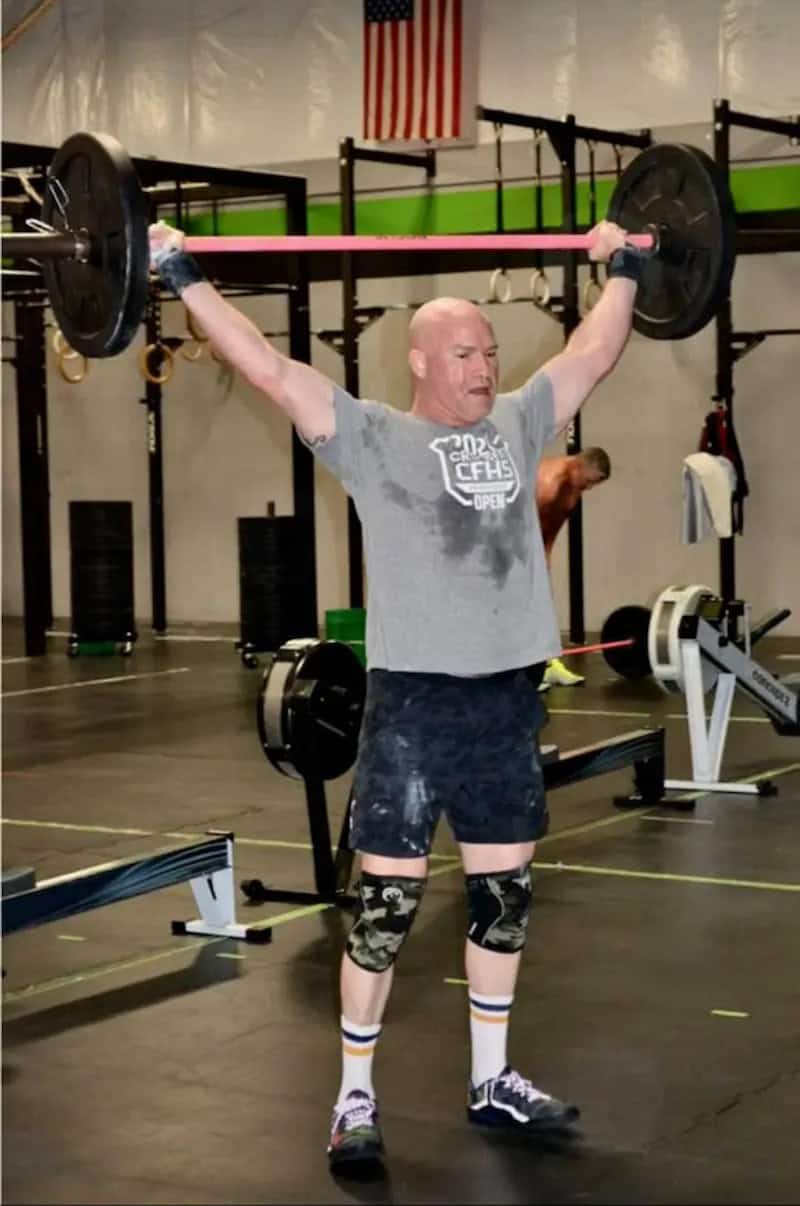
CrossFit Injuries: Why Your Body Was Already Broken
You tweaked your shoulder doing overhead squats. Your hip started hurting after a clean and jerk PR. Your lower back flared up during weightlifter chiropractors. And now everyone is telling you the same thing: "Maybe you should stop doing CrossFit." Here's the truth nobody wants to tell you: CrossFit didn't break you. Your body was already broken. CrossFit just exposed it.
📋 Table of Contents
- The Real Problem: Pre-Existing Dysfunction
- Why CrossFit Gets Blamed
- The Most Common CrossFit Injuries
- Why Most Chiropractors Tell You to Stop CrossFit
- How Chiropractic Care Fixes the Real Problem
- Injury Prevention: How to Keep Training
- When to Get Help
- Walk-In Care for CrossFit Athletes in Tulsa
- Frequently Asked Questions
The Real Problem: Pre-Existing Dysfunction
I'm Dr. Jason Forward, and I've been doing CrossFit since 2021. I've trained at CrossFit Hammered Steel in Mississippi, CrossFit Roots in Colorado, and currently train at CrossFit Jenks here in Tulsa. I can do kipping pull-ups, butterfly pull-ups, and chest-to-bar pull-ups. I understand the movements, the intensity, and yes, the injuries.
And I'm here to tell you that most "CrossFit injuries" have nothing to do with CrossFit.
When someone walks into Vanguard Chiropractic with a CrossFit injury, here's what I usually find:
A shoulder that's been slightly off-track for years. A hip that's been compensating since high school sports. A thoracic spine that hasn't moved properly since they started their desk job. The dysfunction was already there. CrossFit just asked their body to perform at a level their dysfunction couldn't handle.
Think about it: If your shoulder was perfectly aligned, mobile, and stable, overhead squats wouldn't hurt it. If your hip had full range of motion and proper mechanics, heavy cleans wouldn't tweak it.
The problem isn't the movement. The problem is that your body wasn't ready for the movement.
Why CrossFit Gets Blamed
CrossFit gets blamed because it demands more from your body than walking to your car or sitting at a desk. It exposes weaknesses that have been hiding for years.
You can have:
- Limited shoulder mobility
- Poor hip mechanics
- Restricted thoracic rotation
- Weak core stability
- Compensatory movement patterns
...and you'll be fine doing everyday activities.
But the second you ask your body to snatch 135 pounds overhead or do 50 wall balls for time, those dysfunctions can't hide anymore.
CrossFit didn't create the problem. CrossFit revealed it.
The Most Common "CrossFit Injuries" (And What's Really Wrong)
What's actually wrong: Your shoulder blade isn't moving properly. Your rotator cuff is compensating for poor scapular mechanics. Your thoracic spine is too stiff to allow proper overhead positioning. This is why shoulder pain during CrossFit isn't a CrossFit problem - it's a mechanical dysfunction problem that CrossFit exposed.
What's actually wrong: Your pelvis is rotated. Your sacroiliac joint isn't moving symmetrically. One hip has less internal rotation than the other, forcing compensation. Many athletes flare their toes out way too far trying to get lower, which creates knee problems. Others can't get low enough because of tight ankles, calves, or lower leg restrictions. Some can't keep their chest up in the bottom of the squat because of thoracic immobility. You've probably had this dysfunction for years. You just never asked your hips to squat to depth with 200+ pounds on your back before.
What's actually wrong: Your pelvis isn't neutral. Your core can't stabilize properly under load. Your hip flexors are pulling your pelvis into anterior tilt, forcing your lower back to hyperextend. The deadlift didn't hurt your back. The deadlift exposed that your back has been compensating for poor pelvic mechanics for years.
Why Most Chiropractors Tell You to Stop CrossFit (And Why I Don't)
Here's what happens when most people go to a chiropractor with a CrossFit injury:
Chiropractor: "What happened?"
You: "I hurt my shoulder doing overhead squats."
Chiropractor: "You should probably stop doing CrossFit."
This drives me crazy.
The chiropractor isn't wrong that the movement triggered the pain. But they're missing the point: the movement didn't create the dysfunction, it revealed it.
Telling you to stop CrossFit is like telling someone with knee pain to stop walking. Sure, walking triggers the pain - but the problem isn't walking, it's the mechanical dysfunction causing the knee to track improperly.
I don't tell people to stop CrossFit. I fix the dysfunction so they can keep doing CrossFit. In fact, I want MORE people doing CrossFit.
I had a patient at my previous clinic who was getting frustrated that the relief from her adjustments seemed temporary. I asked her: "Do you exercise?" She said yeah, but not as much as she should. No real plan. She had a challenging job and a Type A personality, so I told her: "You should try CrossFit. Type A people thrive in CrossFit."
She started. Fell in love with it.
When I was leaving that clinic, I told her I was moving. She looked at me and said, "You changed my life."
I said, "I didn't change your life. I just created a spark. You lit the fire."
She followed me to Vanguard Chiropractic. Still see her once a week. She's 59 now, was 58 at the time. That's what happens when you fix the dysfunction AND give people a reason to move.
How Chiropractic Care Fixes the Real Problem
When you come to see me at Vanguard Chiropractic, here's what we do:
This is why athletes come to me. I understand the movements. I understand the demands. And I understand that telling someone to "just rest" or "stop CrossFit" isn't a solution.
Injury Prevention: How to Keep Training Without Getting Hurt
Here's what I tell every CrossFit athlete:
1. Get Your Mechanics Checked BEFORE You're In Pain
Don't wait until something hurts. If you're serious about CrossFit, get your movement patterns and joint mechanics evaluated proactively. Most injuries are predictable. A chiropractor who understands CrossFit can identify dysfunctions before they become injuries.
2. Scale Appropriately
This isn't about ego. If your shoulder mechanics can't handle 135-pound overhead squats yet, scale the weight. Build the movement pattern correctly first.
3. Don't Ignore Small Tweaks
That "little tweak" in your hip that goes away after warmup? That's your body telling you something is wrong. Address it before it becomes a real injury.
4. Maintain Your Body Like You Maintain Your Car
You wouldn't drive 50,000 miles without an oil change. Don't train for months without getting adjusted. Regular chiropractic care isn't just for when you're hurt. It's maintenance to keep you training without getting hurt.
When to Get Help
You should see a chiropractor who understands CrossFit if:
- You have pain during specific movements (overhead squats, snatches, cleans, deadlifts)
- You have pain that goes away with warmup but comes back during workouts
- One side feels different than the other during movements
- You've been told to "just rest" but the pain keeps coming back when you return to training
- You want to prevent injuries before they happen
Don't wait until you're sidelined. Get the dysfunction fixed while it's still small.
- A visible deformity, pop, or snap followed by immediate inability to load the joint
- Numbness, tingling, or weakness in the arm or leg following a spine or shoulder injury
- Shoulder or hip pain after a fall, collision, or direct impact at high velocity
- Severe headache immediately following a neck injury or head contact
- Any change in bowel or bladder function after a back injury
- Fever accompanying a joint injury with no clear mechanical cause
Walk-In Care for CrossFit Athletes in Tulsa
Here's how we work at Vanguard Chiropractic:
I train at CrossFit Jenks. I know the movements. I know the injuries. And I know how to get you back to training without telling you to quit.
Location: 1334 E. 41st Street, Tulsa, OK 74105 (Brookside)
Phone: 918-948-7990
The Bottom Line
CrossFit doesn't cause injuries. Pre-existing dysfunction causes injuries. CrossFit just makes it impossible to ignore.
If you're dealing with pain during CrossFit, the answer isn't to stop training. The answer is to fix the mechanical dysfunction that's been there all along.
Your body was built to move. Let's get it moving correctly so you can keep doing what you love.
Walk in today. Let's fix what's actually broken.
Frequently Asked Questions
More From Vanguard Chiropractic
Stop Resting the Same Injury and Getting the Same Result
Walk in at 1334 E. 41st Street in Brookside Tulsa. $40 flat. No appointment. No insurance required. Dr. Jason Forward DC evaluates every patient personally. Open Monday through Friday 10am to 7pm and Saturday 10am to 2pm.
This content is for educational purposes only and does not constitute medical advice. Chiropractic care addresses mechanical joint dysfunction and does not treat, cure, or prevent disease. Red flags requiring medical referral include fever, unexplained weight loss, night sweats, bowel/bladder changes, saddle anesthesia, progressive neurological deficits, or trauma. If you experience any of these symptoms, seek immediate medical attention.