How Stress Shows Up in Your Body | Vanguard Chiropractic Tulsat
How Stress Shows Up in Your Body: The Posture and Movement Patterns Most People Miss
Most people think of stress as something that affects their mind — racing thoughts, irritability, trouble sleeping, or feeling overwhelmed. But at Vanguard Chiropractic in Tulsa’s Brookside area, we see the physical side of stress every single day.
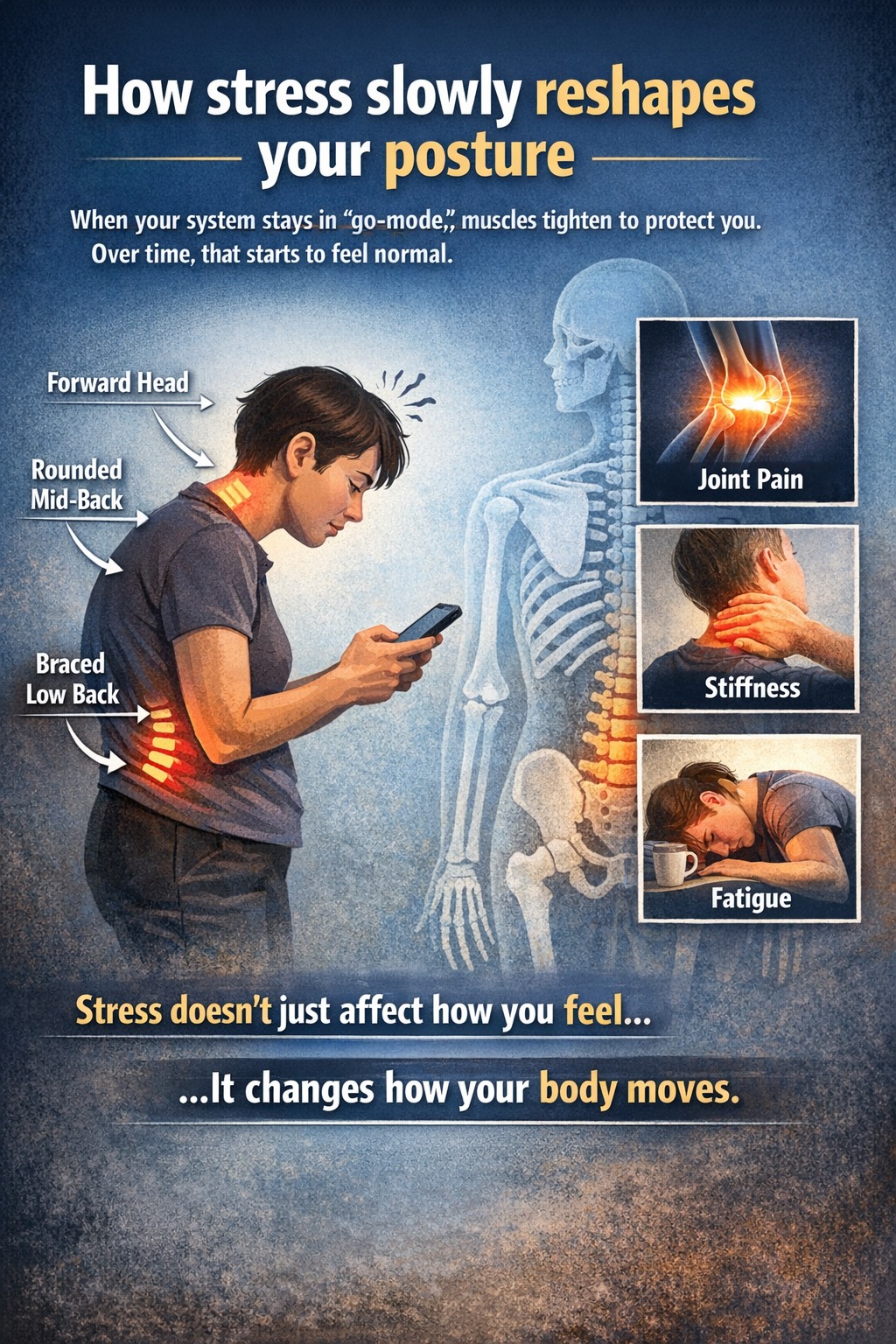
Stress doesn’t just live in your head. It lives in your posture.
It lives in your movement patterns.
And it slowly changes the way your body functions — often without you realizing it.
This blog explains the subtle ways stress shows up in the body, why these patterns matter, and how small adjustments in awareness and consistency can support healthier movement over time.
This is not about blaming yourself for stress. It’s about understanding how your body adapts — so you can take back control of your movement, your habits, and your long-term function.
Why Stress Changes the Way You Move
When you’re under stress, your body doesn’t know the difference between daily life and danger. The nervous system shifts into a protective mode called “fight, flight, or freeze.”
This creates predictable patterns in your muscles, joints, and posture:
Your shoulders lift or round forward
Your neck stiffens
Your jaw tightens
Your breathing gets shallow
Your ribcage stops expanding normally
Your low back starts to carry more tension
None of these happen suddenly. They build quietly, hour by hour, day by day — especially if the stress continues for long periods.
Over time, these patterns become your default movement habits. That’s when people usually walk into the clinic saying things like:
“I didn’t do anything — it just started hurting out of nowhere.”
But the truth is that the body has been adapting for a long time.
The Most Common Stress-Related Patterns We See in Tulsa
Here are the five patterns we observe most often in our Brookside clinic:
1. Forward Head and Rounded Shoulders
Tulsa has a strong desk-job culture, long commutes, and plenty of screen time — all of which amplify stress posture.
When you’re stressed:
Your head drifts forward
Your shoulders roll in
Your upper back stiffens to stabilize everything
This pattern affects:
Neck motion
Shoulder mobility
Breathing efficiency
The way the spine distributes load
Even if you don’t feel discomfort today, these patterns affect how your body responds to exercise, sleep, lifting, and daily movement.
2. Shallow Breathing and Rib Restrictions
Stress shortens your breath. Instead of deep, rib-expanding breaths, the body switches to quick, upper-chest breathing.
Here’s what this changes over time:
The diaphragm stops working fully
The upper back loses mobility
The ribs stiffen
Neck muscles overwork to help you breathe
This leads to predictable movement limitations, even in people who “feel fine.”
3. Jaw Tightness and Clenching
Jaw tension is one of the most overlooked stress responses.
Clenching or grinding can subtly change:
Neck alignment
Muscle tone around the skull
Shoulder resting position
Overall posture
People often blame this on sleeping wrong or pillows, when stress is the real underlying driver.
4. Hip Tightness From “Bracing”
When you’re stressed, your body literally braces for impact — even when no danger exists.
This creates tension in the:
Hip flexors
Glutes
Low back
Pelvic stabilizers
If these muscles stay tight long enough, your posture, stride, and spinal motion begin to adapt around them.
5. Holding Your Body Still
One of the most powerful — and least recognized — signs of stress is stillness.
People sit longer.
Move less.
Avoid exercise.
Stop stretching.
Forget to reset posture.
Stillness may feel like rest, but for the spine, it often means restriction.
The longer you stay still, the harder your joints and muscles have to work when you finally do move.
Why These Patterns Matter More Than People Think
The body is designed to move.
When stress changes the way you move — even slightly — the effects compound.
Over weeks and months, stress-driven posture patterns can influence:
Joint mobility
Muscle balance
Breathing mechanics
Lifting form
Spinal loading
Sleep position
Everyday function
This is why many people experience recurring issues despite “doing nothing to cause them.”
The cause wasn’t a moment — it was a pattern.
And patterns require consistency to change.
How Chiropractic Supports Your Body Through Stress
Chiropractic care does not remove stress.
What it does support is your body’s ability to move the way it was designed to — even when life is busy or overwhelming.
Adjustments help restore motion to restricted joints and support balanced movement patterns so your body is not constantly operating in a stress posture.
This matters because:
Movement is how the body resets
Mobility reduces tension that stress builds
Balanced joints support healthier posture
Consistency keeps old patterns from returning
One visit won’t rewrite months of stress patterns, and this is where patient responsibility becomes essential.
When patients follow the recommended frequency, progress is smoother and more predictable.
When they wait until they’re in crisis, the body has to start from behind.
Consistency is what transforms chiropractic from “short-term relief” into long-term structural support.
Realistic Steps You Can Take Today
You don’t need a major lifestyle overhaul to make progress.
Small, steady changes create the biggest impact.
Try:
Standing and stretching every 45 minutes
Raising screens to eye level
Taking slow, deep breaths several times a day
Going on short, intentional walks
Adding a weekly or biweekly chiropractic visit
Not waiting until you’re in severe discomfort to seek help
Motion is medicine — especially in a stressed body.
Your Body Speaks. Stress Just Changes the Language.
Stress isn’t just emotional; it’s physical.
Your posture, your breathing, your stride, your shoulders — they all react long before you notice something feels off.
The good news?
Your body can also adapt in a positive direction with the right support and consistency.
If you’re noticing stiffness, tension, or subtle changes in how you move, now is the ideal time to take action.
Book Now: https://vanguardchiropractic.janeapp.com/
Call: 918-986-7399
At Vanguard Chiropractic in Tulsa’s Brookside area, we’re here to help you understand your body — and support it through every season of life.


